Introduction
Imagine a place where your vacation doesn’t just recharge you—but also helps protect the planet. Where your hotel runs on solar power, your meals come from a rooftop garden, and your hike supports reforestation efforts. This isn’t a distant utopia. It’s happening right now, in destinations around the world that are proving travel can be a force for good.
As climate awareness grows and overtourism strains iconic spots like Venice and Bali, more travelers are asking: “Where can I go that aligns with my values?” The answer lies in eco-friendly destinations—places that prioritize clean energy, community well-being, wildlife conservation, and cultural preservation.
In this guide, we’ll explore six standout eco-travel gems that aren’t just beautiful, but actively regenerative. From a carbon-neutral island nation to a European capital powered by bicycles, these destinations show that sustainability and unforgettable experiences go hand in hand.
Whether you’re a solo adventurer, a family, or a luxury seeker, you’ll discover that choosing green doesn’t mean sacrificing comfort—it means traveling with more meaning, more connection, and more joy.
Because the best trips don’t just leave footprints—they leave a legacy.
1. Costa Rica – The Pioneer of Regenerative Tourism
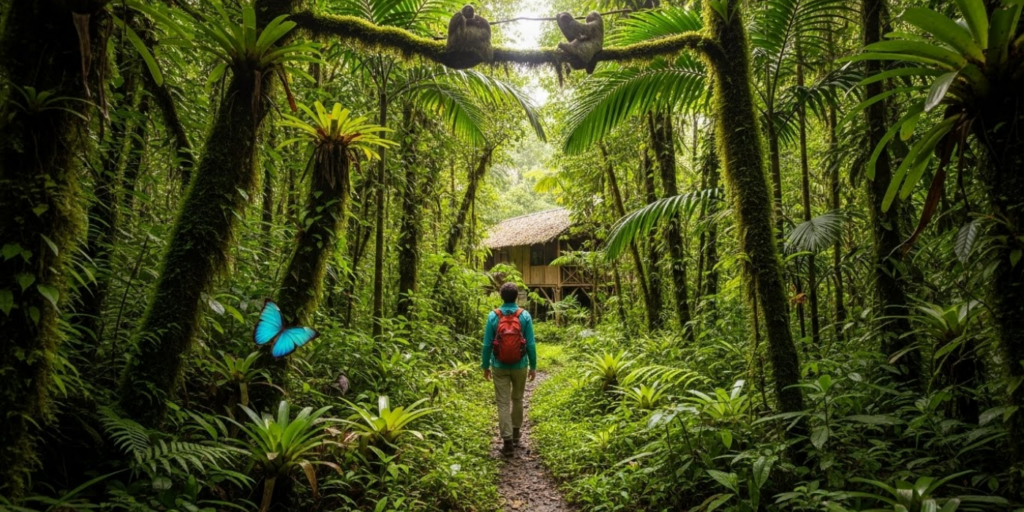
Costa Rica has long been the gold standard for eco-tourism—but in 2025, it’s going further. The country is on track to become the world’s first carbon-neutral nation by 2030, with over 99% of its electricity already coming from renewable sources.
What makes it truly special? Over 25% of its land is protected—home to sloths, toucans, sea turtles, and howler monkeys. And eco-lodges like Lapa Rios or Finca Rosa Blanca don’t just minimize impact—they actively restore rainforests and fund local schools.
Why it’s worth visiting:
- Wildlife immersion: Walk suspension bridges through cloud forests or witness sea turtle nesting in Tortuguero
- Community-led tours: Many experiences are run by Indigenous or rural cooperatives
- Easy accessibility: Direct flights from major U.S. cities
Travel tip: Visit during the “green season” (May–November)—fewer crowds, lush landscapes, and lower prices. Just pack a rain jacket!
Real impact: Your park entrance fees directly fund conservation. In 2023 alone, tourism revenue helped protect 12 endangered species from extinction.
2. Slovenia – Europe’s Green Heart
Tucked between the Alps and the Adriatic, Slovenia is tiny in size but huge in sustainability. In 2016, its capital, Ljubljana, was named European Green Capital—and the whole country followed suit.
Ljubljana bans cars from its historic center, runs on 100% renewable energy, and has more beekeepers per capita than almost any nation (thanks to its pollinator-friendly policies). Meanwhile, Lake Bled and Triglav National Park offer pristine alpine beauty with strict visitor caps to prevent degradation.
Highlights for eco-travelers:
- Zero-waste restaurants like Strelec (in Ljubljana Castle) that compost everything
- Eco-certified farms offering “stay and volunteer” programs
- Extensive bike trails and electric shuttle boats on Lake Bled
Why it stands out: Slovenia’s Green Scheme of Slovenian Tourism certifies over 200 destinations, accommodations, and parks—so you can trust your choices.
Pro move: Take the train from Vienna or Venice—Slovenia’s rail system connects seamlessly with Europe’s eco-network.
3. Palau – Where Travelers Become Conservationists
This Pacific island nation isn’t just protecting its paradise—it’s requiring visitors to pledge to do the same.
Since 2017, every tourist entering Palau must sign the Palau Pledge, a stamped passport promise to “act in an ecologically and culturally responsible way.” It’s not symbolic—violators can be fined or banned.
Palau has also created the world’s first shark sanctuary, banned reef-toxic sunscreens, and limited cruise ship arrivals to preserve its coral reefs, which are among the most biodiverse on Earth.
Unforgettable experiences:
- Snorkeling in Jellyfish Lake (when open—monitor conservation updates)
- Diving the German Channel, where manta rays dance in cleaning stations
- Staying at eco-resorts that use solar power and desalinated water
Travel responsibly: Book with local operators like Fish ‘n Fins, which funds marine research and employs Palauan youth.
Why visit now? Palau proves that small nations can lead global change—and your trip directly supports that mission.
4. Copenhagen, Denmark – The World’s Most Livable (and Bikeable) City
Copenhagen isn’t just eco-friendly—it’s designed for human-scale joy. With over 62% of residents biking to work or school, the city has more bikes than people and aims to be carbon-neutral by 2025.
From wind-powered public transit to restaurants that turn food waste into fine dining (hello, Amass), sustainability is woven into daily life—not an afterthought.
Green highlights:
- CopenHill: A waste-to-energy plant with a ski slope on its roof
- Car-free zones in the historic center
- Organic-certified restaurants: Over 60% of the city’s food service uses organic ingredients
For travelers: Rent a bike (it’s safe, easy, and flat!), stay in eco-hotels like Hotel Ottilia, and picnic in Superkilen Park—a multicultural urban oasis.
Bonus: Denmark’s strong public transport means you can explore beyond the city (hello, castles and beaches!) without a car.
5. Bhutan – Happiness Over Footprints

In the Himalayas, Bhutan measures success not by GDP, but by Gross National Happiness—and that includes environmental health. The country’s constitution mandates that at least 60% of its land remain forested (currently at 71%).
Visitors pay a Sustainable Development Fee (currently $100–$200/day), which funds free healthcare, education, and conservation. It’s not a luxury tax—it’s an investment in the kingdom’s future.
Why it’s transformative:
- Carbon-negative: Bhutan absorbs more CO₂ than it emits
- Sacred landscapes: Tiger’s Nest Monastery clings to a cliff, accessible only by foot
- Community homestays: Sleep in traditional farmhouses and eat home-cooked meals
Travel tip: Go with a licensed Bhutanese tour operator—it’s required by law, and ensures your money stays local.
Perspective shift: In Bhutan, tourism isn’t about “seeing”—it’s about being present, respectful, and humble.
6. New Zealand – Guardianship in Action
New Zealand’s Māori concept of kaitiakitanga (guardianship of the land) is now central to its national tourism strategy. From banning single-use plastics to restoring native forests, the country is healing its ecosystems while welcoming visitors.
Eco-experiences you’ll love:
- Milford Sound: Take a small-boat eco-cruise (not a massive ferry) to reduce wake damage
- Rotorua: Stay in geothermal-powered lodges and learn about Māori conservation traditions
- Stewart Island: Track kiwi birds on guided night walks with conservation rangers
Sustainability wins:
- All national parks are plastic-free
- Many lodges, like Hapuku Lodge, use regenerative farming and native reforestation
- Electric vehicle rentals are widely available
Best time to go: October–April for mild weather and long days—but book early to support smaller, eco-certified operators.
How to Travel More Sustainably—Wherever You Go
You don’t need to visit these six destinations to make a difference. Every trip can be greener with small, intentional choices:
✅ Fly less, stay longer: One long trip has a lower carbon footprint than three short getaways
✅ Choose certified eco-lodges: Look for Green Key, EarthCheck, or Global Sustainable Tourism Council seals
✅ Eat local: Skip imported foods; support farm-to-table restaurants
✅ Say no to single-use plastics: Carry a water bottle, utensils, and tote bag
✅ Respect wildlife: Observe from a distance—never feed or touch animals
Remember: Sustainability isn’t about perfection. It’s about progress, awareness, and care.
Quick Checklist: Your Eco-Travel Action Plan
✅ Research destinations with strong environmental policies
✅ Book accommodations and tours that are locally owned and certified
✅ Pack light (less weight = lower flight emissions)
✅ Offset your carbon through reputable programs (e.g., MyClimate, Gold Standard)
✅ Leave no trace—take only photos, leave only footprints
Conclusion
The most beautiful places on Earth are also the most fragile. But by choosing to visit destinations that honor nature, empower communities, and innovate responsibly, we become part of the solution—not the problem.
The six places highlighted here—Costa Rica, Slovenia, Palau, Copenhagen, Bhutan, and New Zealand—prove that travel can heal, not harm. They invite us to slow down, connect deeply, and leave things better than we found them.
So as you plan your next getaway, ask: “Where can I go that reflects the world I want to live in?” The answer might just change not only your trip—but your perspective.
We’d love to hear from you! Have you visited any of these eco-destinations? What sustainable travel habit has made the biggest difference for you? Share your story in the comments below—your tip could inspire another traveler to choose wisely.
And if this guide resonated with you, please share it with a friend who believes travel should leave the world more beautiful than it found it.
Happy (and green) travels!

Michael Thompson is an enthusiast of travel, restaurants, financial freedom, and personal performance. He enjoys discovering new destinations and exploring local cuisine while constantly working on self-improvement and independence. For Michael, life is about creating meaningful experiences, growing every day, and building a lifestyle that combines freedom, discipline, and curiosity.