
Introduction
You’ve just landed in a vibrant new city—maybe Bangkok, Mexico City, or Istanbul—and you’re eager to dive in. But the subway signs are in a language you don’t understand, taxis seem scarce, and your hotel is miles away. Ride-sharing apps like Uber, Bolt, or Grab promise a quick, convenient solution: tap your phone, and a car arrives in minutes.
But here’s the catch: using ride-sharing abroad comes with unique risks that don’t exist at home. From unlicensed drivers mimicking official cars to scams targeting tourists, the convenience can quickly turn into a safety hazard—especially when you’re tired, disoriented, or unfamiliar with local norms.
The good news? With the right preparation and awareness, you can use ride-sharing services safely, confidently, and efficiently anywhere in the world. In this guide, we’ll walk you through essential strategies to verify your ride, protect your privacy, avoid common scams, and stay secure from pickup to drop-off. Whether you’re a solo traveler, a family on vacation, or a business traveler on a tight schedule, these tips will help you navigate foreign cities like a local—with peace of mind.
1. Research the Right App for Your Destination
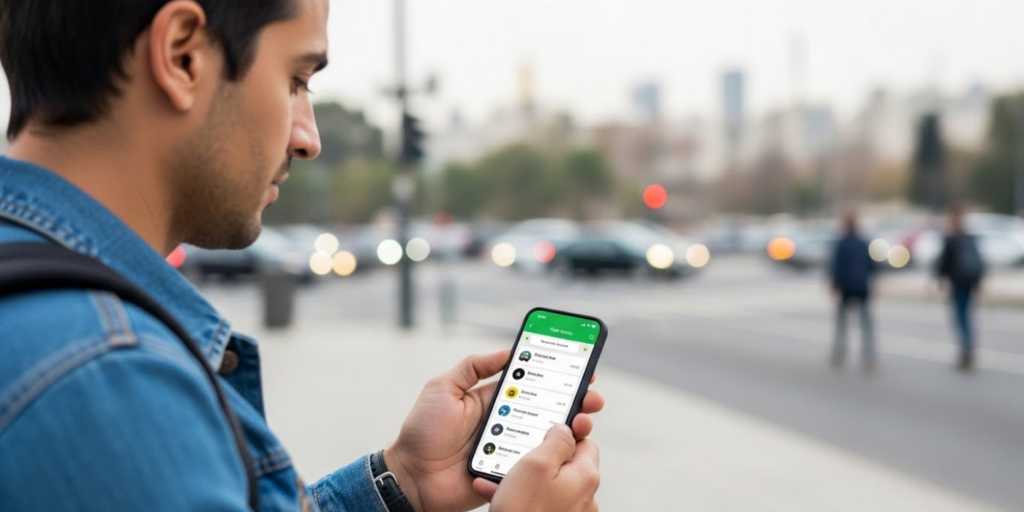
Not all ride-sharing apps work everywhere—and using the wrong one can leave you stranded or vulnerable.
Before you travel, identify the dominant ride-hailing service in your destination:
- Southeast Asia: Grab (Singapore, Thailand, Vietnam, Indonesia)
- Europe: Bolt (formerly Taxify) or Free Now (Germany, UK, Spain)
- Latin America: DiDi (Mexico, Brazil, Argentina) or Uber (widely available)
- Middle East & Africa: Careem (UAE, Saudi Arabia) or Bolt
Why this matters: Local apps often have better coverage, lower prices, and drivers who know the city intimately. Uber may be available in Paris, but Bolt is cheaper and more common in Warsaw. In Jakarta, Grab dominates—Uber doesn’t even operate there.
Pro tip: Download the correct app before you leave home, and create an account using your credit card (not local cash). Many apps require SMS verification—ensure your phone works abroad (consider an eSIM like Airalo for instant data).
Bonus: Save the app’s customer support number in your phone. If something goes wrong, you’ll need it fast.
Knowing the local app isn’t just convenient—it’s your first layer of safety.
2. Always Verify Driver and Vehicle Details
This is non-negotiable—never assume the car waiting at the curb is yours. Scammers often pose as ride-share drivers, especially near airports or tourist zones.
Before you approach any vehicle, cross-check four key details in your app:
- Driver’s name and photo
- Car make, model, and color
- License plate number (match it exactly—scammers often use similar plates)
- Any official identifiers (e.g., Uber’s glowing beacon, Grab’s QR code)
Your safety ritual:
- Stand away from the curb while verifying.
- Ask the driver, “Who are you here to pick up?” (They should say your name.)
- Only enter the car once all details match perfectly.
Real-life warning: In 2023, a tourist in Lima got into a car that matched her DiDi app—except the license plate had one digit changed. She realized the mistake when the driver took a strange route and managed to escape at a gas station. Always double-check the plate.
This 10-second habit can prevent serious situations. Trust the app—not your assumptions.
3. Share Your Trip in Real Time
Most ride-sharing apps include a “Share Trip” feature—and it’s one of your best safety tools when traveling alone.
With one tap, you can send a live link to a trusted friend or family member that shows:
- Your driver’s name, photo, and vehicle details
- Your real-time location on a map
- Estimated time of arrival
Why this matters: If the car takes a suspicious detour, communication breaks down, or you feel unsafe, your contact can call local authorities with precise, up-to-date information.
Best practices:
- Share your trip before you get in the car, not after.
- Choose someone who’s awake and responsive in your time zone.
- If you’re solo traveling, consider sharing with your hotel front desk or a travel buddy.
Pro move: Some apps (like Uber) also offer an Emergency Button that connects you directly to local law enforcement with your GPS location—find it in the app’s safety menu.
Remember: Safety isn’t paranoia—it’s preparation. Sharing your trip takes seconds and could be life-saving.
4. Avoid Common Ride-Sharing Scams Overseas
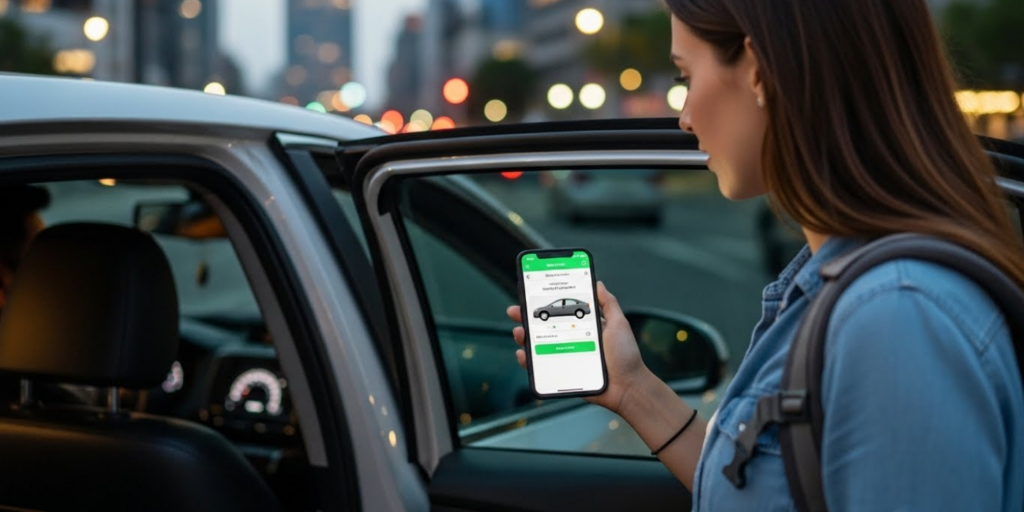
Scammers adapt to local conditions, but several tactics appear worldwide. Stay alert for these red flags:
A. The “App Isn’t Working” Scam
A driver approaches you saying, “Your Uber canceled—get in my car, same price.” Never accept unsolicited rides, even if they look official. Always book through the app.
B. Fake Cash Requests
In some countries, drivers claim the app is “down” and ask for cash—often at inflated rates. Legitimate drivers don’t ask for cash unless you’ve selected that option in-app (rare outside specific regions). Stick to digital payments.
C. The Long-Detour Trick
Some drivers take unnecessarily long routes to increase your fare. Monitor your route on the app’s map. If you notice a strange detour, calmly ask, “Is there traffic ahead?” Most will correct course. If not, end the ride at a safe, public place.
D. Unmarked or “Ghost” Cars
In cities with lax regulation, unlicensed drivers may mimic ride-share branding. Always verify the official app-placed decal, light, or QR code.
Pro tip: Download offline maps (Google Maps or Maps.me) so you can track your route even without data.
When in doubt, trust your gut. If something feels off, cancel the ride and request a new one.
5. Protect Your Privacy and Personal Information
Your phone holds your itinerary, hotel address, and payment details—so keep it secure during rides.
Smart habits:
- Use a privacy screen protector to prevent shoulder surfing.
- Avoid logging into sensitive accounts (like banking) while in the car.
- Don’t announce your hotel or plans out loud—even if the driver seems friendly. (“Back to my Airbnb” gives away your location.)
App settings to adjust before you travel:
- Turn off precise location sharing when the app isn’t in use.
- Disable “Home” and “Work” address shortcuts—replace them with generic names like “Downtown Hotel.”
- Use a burner email for ride-share accounts if you’re concerned about data privacy.
Also: Never leave your phone, wallet, or bag behind. At the end of the ride, do a quick “seat check”—run your hand along the seat and floor before exiting.
Small actions like these prevent identity theft, stalking, or targeted scams.
6. Choose the Safest Ride Type for Your Situation
Not all ride options are equal. When safety is a priority, choose wisely:
- Avoid shared rides (like Uber Pool) in unfamiliar cities. You’ll be picked up and dropped off near strangers, often in poorly lit or isolated spots.
- Opt for higher-tier services (Uber Black, Bolt Premium) in high-risk areas—they often use professional drivers with stricter background checks.
- For late-night rides, select options that require two-factor authentication or offer driver verification (some apps now let you confirm the driver’s face via photo match).
Solo travelers, especially women, should consider:
- Scheduling rides during daylight hours when possible
- Sitting in the back seat (safer in case of conflict and standard in many countries)
- Using apps with women-only ride options (available in India, Egypt, and parts of Southeast Asia)
Family travelers: Look for services that offer car seats (enabled in-app) or “family-friendly” driver badges.
Your comfort and security are worth the extra dollar or two.
7. Prepare Before You Land: Data, Payment, and Local Norms
Don’t wait until you’re stranded at baggage claim to figure out ride-sharing. Prep before you go:
- Download the dominant ride-share app for your destination.
- Link a credit card (preferred over local cash for transparency and dispute protection).
- Get an eSIM or local SIM for reliable data—ride-sharing doesn’t work without it.
- Research local norms: In some countries, drivers expect tips; in others, it’s unnecessary. Know the custom to avoid awkwardness.
Bonus: Save your hotel’s address in the local language (e.g., as a screenshot in Mandarin or Arabic). If your driver doesn’t speak English, you can show them the written address.
Real benefit: Being prepared reduces stress, prevents overpaying, and keeps you from looking like an easy target for scams.
A little prep turns uncertainty into confidence.
Safety Is a Mindset—Not Just a Checklist
Using ride-sharing safely abroad isn’t about fear—it’s about awareness, preparation, and empowerment. Every verified license plate, every shared trip link, every polite “no” to a suspicious offer is an act of self-respect. You’re not just protecting yourself; you’re claiming your right to explore the world freely and joyfully.
When you travel with intention, the world opens up—and ride-sharing becomes not a risk, but a bridge to new experiences.
Conclusion
Ride-sharing can be a safe, efficient, and even enjoyable part of your international travels—if you use it wisely. By researching the right local app, verifying your driver, sharing your trip, avoiding scams, protecting your privacy, choosing safe ride types, and preparing ahead of time, you’ll navigate foreign cities with the confidence of a local. These habits take seconds to implement but offer priceless peace of mind.
So before your next trip, take five minutes to download the correct app, enable safety features, and share your plan with a friend. You’ve got this.
We’d love to hear from you! Have you encountered a ride-sharing scam—or used one of these tips to stay safe abroad? Share your story or advice in the comments below. And if this guide helped you feel more prepared, pass it on to a fellow traveler who’s ready to explore the world—safely, smartly, and without fear. Safe journeys!

Michael Thompson is an enthusiast of travel, restaurants, financial freedom, and personal performance. He enjoys discovering new destinations and exploring local cuisine while constantly working on self-improvement and independence. For Michael, life is about creating meaningful experiences, growing every day, and building a lifestyle that combines freedom, discipline, and curiosity.