Introduction
You’re wandering through a charming alley in Lisbon, stomach growling, when you spot two restaurants side by side. One has laminated menus in five languages and a waiter beckoning you with a forced smile. The other has no English sign, a handwritten chalkboard, and a line of locals waiting for tables. Which one serves the better meal?
The answer might seem obvious—but in today’s age of Instagrammable façades and algorithm-driven reviews, spotting a truly great restaurant while traveling takes more than just a five-star rating. A quality dining experience goes beyond fancy plating or trendy cocktails. It’s about fresh ingredients, authentic preparation, cultural respect, and hospitality that makes you feel like a guest, not a tourist.
In this guide, we’ll share practical, real-world strategies to help you cut through the noise and find restaurants that deliver genuine value, flavor, and soul—whether you’re in Bangkok, Barcelona, or Buenos Aires. From reading subtle cues to using technology wisely, these tips will transform you from a wandering diner into a confident culinary explorer. Because the best travel memories are often made over a shared meal—and with the right approach, that meal is always within reach.
1. Look for Signs of Local Patronage (Not Just Tourist Traffic)
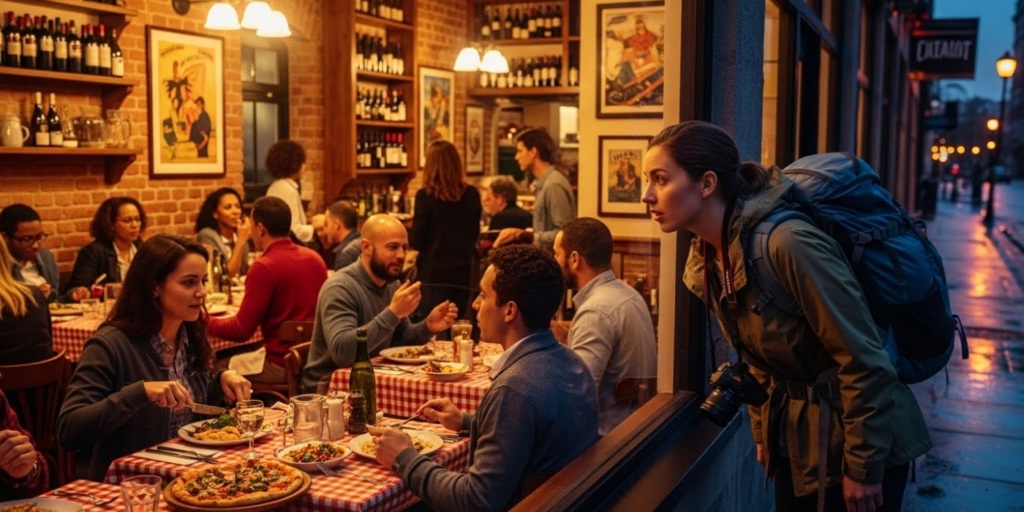
One of the most reliable indicators of a quality restaurant? It’s filled with locals—not just visitors.
Why? Locals eat somewhere repeatedly only if the food is consistently good, fairly priced, and made with care. Tourists, on the other hand, are a one-time audience—meaning restaurants targeting them often prioritize volume over quality.
What to watch for:
- Dining hours: If the place is packed at 1:30 PM (lunch) or 8:30 PM (dinner)—typical local meal times—you’re on the right track.
- Language on menus: Handwritten boards in the local language > glossy menus with photos in 10 languages.
- Staff behavior: Are waiters chatting casually with regulars? That’s a strong sign of community trust.
Real example: In Rome, a tiny trattoria near Trastevere with no website but a line of office workers at noon likely serves better carbonara than the “Best Pasta in Rome!” spot next to the Colosseum.
Pro tip: Visit during off-peak hours (like 2:30 PM) and ask, “Is this a place where locals eat?” Simple—but surprisingly effective.
2. Read Between the Lines of Online Reviews
Yes, apps like Google Maps and TripAdvisor can help—but only if you know how to read them critically.
Avoid:
- Reviews that say only “Great food!” with no details.
- An unusual spike in 5-star reviews over a short period (could be fake).
- Overuse of stock phrases like “Instagrammable” or “must-visit.”
Instead, look for:
- Specific praise: “The slow-cooked lamb melted off the bone,” or “Their house-made tortillas are worth the trip.”
- Mentions of ingredients: “Fresh catch of the day,” “garden vegetables,” or “family recipe.”
- Recent photos uploaded by real people—not polished marketing shots.
Smart move: Sort Google Maps reviews by “Most recent” and scan for recurring complaints (“rushed service,” “overpriced,” “tasted like freezer burn”). If three people mention the same issue, it’s likely real.
Bonus: Check if locals have reviewed the place. A 4.2 average with 500+ reviews is often more reliable than a 4.9 with 25.
3. Observe the Kitchen and Ingredient Quality
You don’t need to be a chef to spot quality—just pay attention to what’s visible.
At the entrance:
- Is there a display of fresh produce, fish, or bread? That’s a strong sign of daily sourcing.
- Are herbs stored in water (like at a market)? That means they’re fresh, not dried or pre-chopped.
Inside the restaurant:
- Open kitchens let you see cleanliness, organization, and cooking methods.
- Listen for the sounds of sizzling, chopping, or dough being kneaded—not just microwave beeps.
Menu clues:
- Seasonal dishes (“Summer squash risotto”) suggest the chef adapts to what’s fresh.
- Limited menus often mean everything is made in-house, not pre-frozen.
- No “catch-all” dishes (like “American fried rice” or “Italian-Chinese fusion”)—a sign the kitchen knows its roots.
Red flag: Menus offering everything from sushi to steak to pasta. Mastery requires focus—and a quality restaurant usually excels in one cuisine.
4. Trust Your Senses—Before You Even Sit Down
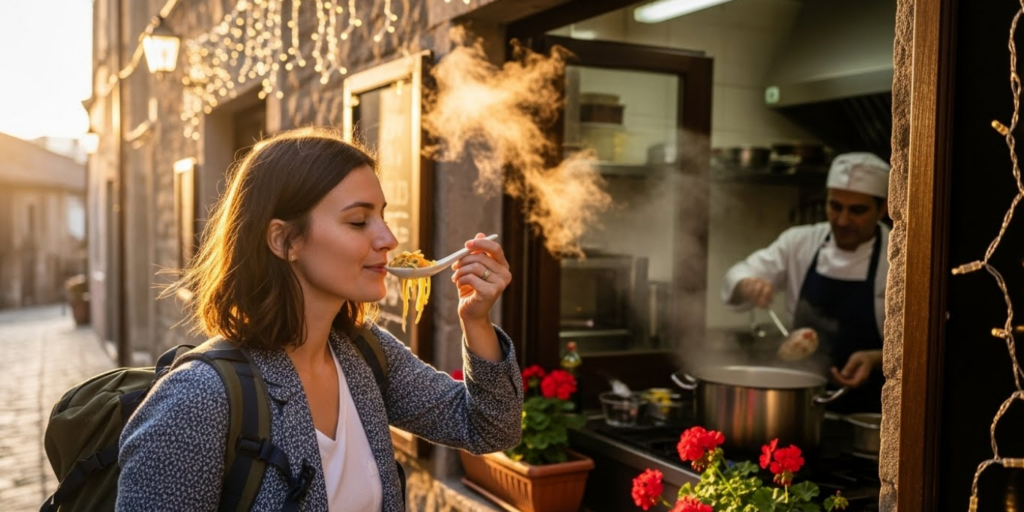
Your instincts are powerful. Before you step inside, pause and observe.
Smell: Do you catch the aroma of roasting meat, baking bread, or simmering spices? Or just grease and stale oil? A good kitchen smells alive.
Sight:
- Is the sidewalk clean?
- Are tablecloths (if used) crisp or stained?
- Is the lighting warm and inviting, or harsh and fluorescent?
Sound:
- Are guests laughing and chatting comfortably?
- Is music subtle, or blasting to cover up kitchen noise?
Body language: Watch how staff interact with guests. Do they make eye contact? Do servers look relaxed or stressed? A calm, attentive team often reflects kitchen confidence.
Analogy: Think of a restaurant like a home. Would you feel welcome here? Would you trust the host to feed your family? If yes—you’ve found something special.
5. Ask the Right Questions (and Listen to the Answers)
Don’t be afraid to engage. A simple conversation can reveal more than any review.
Ask:
- “What’s your most popular dish with locals?”
- “What’s fresh today?”
- “Is this a family-run place?”
What to listen for:
- Enthusiasm: A proud chef or server will light up describing their favorite dish.
- Transparency: They’ll tell you if the fish isn’t great today or if the soup needs more time.
- No hard sell: Quality restaurants don’t need to push expensive items. They’ll guide you to what’s best.
Avoid places where staff:
- Immediately point to the most expensive item
- Can’t explain how a dish is made
- Seem annoyed by questions
Cultural note: In many countries (like Japan or Thailand), humility is valued—so pride may be quiet. Watch for care in presentation and precision in service instead.
6. Consider Price—But Not the Way You Think
A high price tag doesn’t guarantee quality. And a low one doesn’t mean it’s bad. Instead, evaluate value.
Ask yourself:
- Does the price match the setting, portion size, and ingredients?
- Are you paying for location (e.g., oceanfront seat) or actual food quality?
Example: A $30 pasta in a touristy Venice square might use frozen sauce. The same dish for $12 in a quiet neighborhood trattoria could be handmade with local tomatoes and basil.
Smart strategy: Look at the cheapest and most expensive items on the menu. If both are reasonably priced, it’s likely a fair, locally oriented spot. If the range is extreme ($8 salad to $80 steak), it may be designed to upsell tourists.
Remember: Some of the world’s best meals cost under $10—street food in Mexico City, banh mi in Hanoi, or empanadas in Buenos Aires. Quality isn’t about luxury—it’s about integrity.
7. Embrace “Imperfect” Spots—Often Where Magic Lives
Don’t dismiss a place just because it’s small, noisy, or lacks décor. Some of the most memorable meals happen in humble settings.
- A plastic-table diner in Oaxaca serving mole from a 70-year-old recipe
- A hole-in-the-wall in Tokyo with 6 seats and a Michelin Bib Gourmand
- A family’s backyard in Marrakech offering tagine by word of mouth
Why it matters: Perfection is often polished for outsiders. Authenticity is messy, personal, and sometimes inconvenient—but deeply rewarding.
Mindset shift: Trade “Instagrammable” for “meaningful.” The best restaurants don’t just feed you—they tell a story.
Conclusion
Finding a quality restaurant while traveling isn’t about chasing fame or Michelin stars—it’s about seeking honesty, care, and connection. By tuning into local cues, reading reviews wisely, trusting your senses, and engaging with humility, you’ll consistently discover places that nourish both body and spirit.
The goal isn’t to eat at the “best” restaurant in town—but to share a meal that reflects the heart of the place you’re visiting. And more often than not, that meal is waiting just off the main square, down an unmarked street, in a kitchen where someone cooks like they’re feeding family.
So next time you’re hungry in a new city, slow down. Look around. Take a chance. The table with the locals is almost always the right choice.
We’d love to hear from you: What’s the most unexpectedly amazing meal you’ve had while traveling? Or a “tourist trap” you learned to avoid? Share your story in the comments below—and if this guide helped you eat like a local, pass it along to a fellow food-loving traveler. Bon appétit, buen provecho, and happy exploring! 🍝🌍✨

Michael Thompson is an enthusiast of travel, restaurants, financial freedom, and personal performance. He enjoys discovering new destinations and exploring local cuisine while constantly working on self-improvement and independence. For Michael, life is about creating meaningful experiences, growing every day, and building a lifestyle that combines freedom, discipline, and curiosity.