Introduction
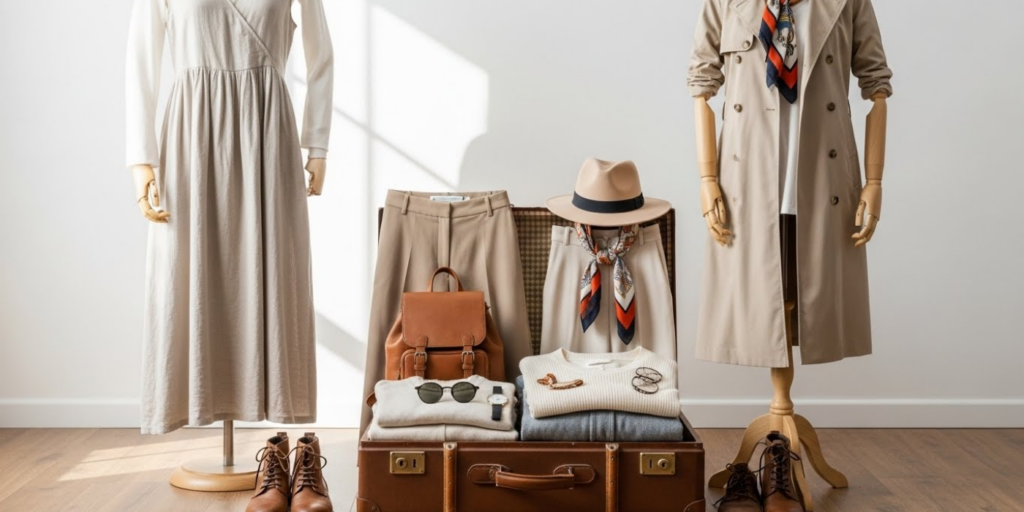
You’re standing in front of your closet, suitcase open, heart racing. You’ve got a trip to Paris, Bali, or New York in a few days—but nothing seems to work. Should you pack the linen shirt or the silk blouse? Sneakers or loafers? And how do you look effortlessly put-together while carrying a backpack, navigating transit, and surviving 12 hours of travel?
Here’s the good news: looking stylish on the road has nothing to do with having a huge wardrobe—and everything to do with smart choices. With a few key pieces and a clear strategy, you can create outfits that are comfortable, versatile, and chic—no matter where you go.
In this guide, we’ll show you how to build a travel capsule wardrobe that adapts to any destination, climate, or occasion. You’ll learn how to mix and match like a pro, choose fabrics that travel well, layer for changing weather, and accessorize for instant polish. Plus, we’ll break down outfit formulas for cities, beaches, mountains, and everything in between.
Say goodbye to overpacking and fashion stress. Hello, confidence—from airport to adventure.
Step 1: Build a Capsule Wardrobe in a Cohesive Color Palette
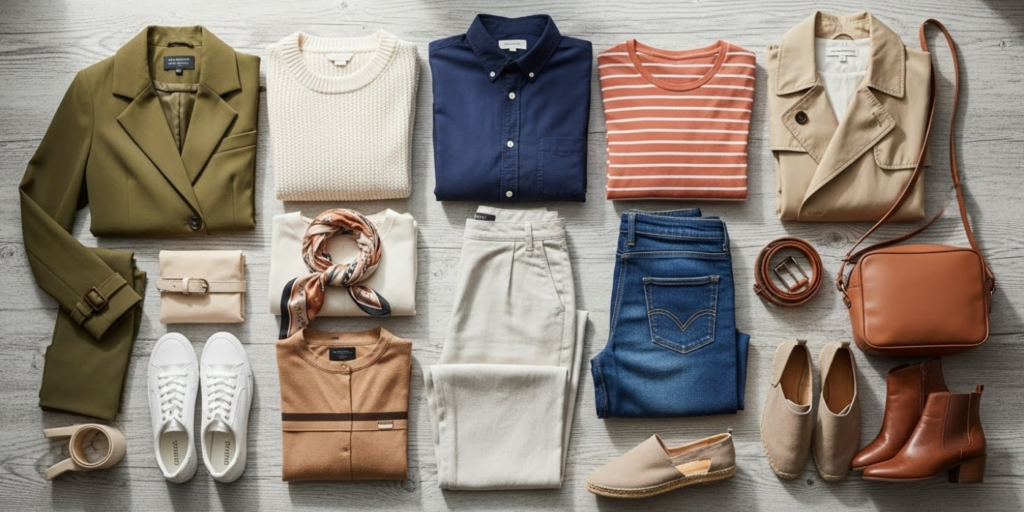
The secret to stylish travel outfits? Limit your colors, multiply your combinations.
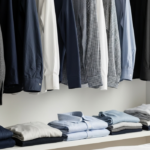
Start with a neutral base: black, navy, gray, beige, or white. Then add 1–2 accent colors (like olive green, rust, or deep burgundy) that complement your skin tone and mix well with neutrals.
Aim for 6–8 core pieces you can wear 3+ ways:
- 2–3 tops (e.g., a silk tank, a tailored button-down, a lightweight knit)
- 2 bottoms (e.g., dark jeans, tailored trousers, or a midi skirt)
- 1 versatile dress (shirt dress or wrap dress)
- 1 lightweight layer (blazer, cardigan, or denim jacket)
- 2 pairs of shoes (walkable sneakers + dressy flats or ankle boots)
Pro tip: Choose wrinkle-resistant, odor-resistant fabrics like merino wool, Tencel™, or high-quality cotton blends. They look polished and require less washing.
Real-life win: Emma traveled through Italy for 10 days with just a carry-on. Her secret? A navy blazer, white tee, black jeans, and a beige midi dress—mixed with scarves and jewelry to create 12 distinct looks.
When everything coordinates, getting dressed becomes effortless—and you always look intentional.
Step 2: Master the Art of Layering for Style and Function
Layering isn’t just for cold weather—it’s your styling superpower in any climate.
Why it works:
- Adapts to temperature swings (airplane → tropical sun → mountain breeze)
- Adds depth and interest to simple outfits
- Lets you meet dress codes (e.g., cover shoulders for temples)
Key layering pieces:
- Lightweight scarf: Doubles as a shawl, headwrap, or bag accessory
- Unlined trench or utility jacket: Water-resistant and timeless
- Long cardigan or duster: Adds elegance over a tank and jeans
- Packable vest: Warmth without bulk
Example: In Tokyo, you might wear a tank + jeans in the afternoon, then add a linen shirt (tied at the waist) and sneakers for dinner. In the Andes, layer a thermal base, sweater, and windbreaker—but keep your jeans and boots consistent.
Pro move: Roll layers instead of folding to save space and reduce wrinkles.
Layering lets you travel light but look rich in variety—and stay comfortable all day.
Step 3: Choose Shoes That Walk the Walk (and Look Great Doing It)
Nothing ruins a stylish outfit faster than impractical shoes. But you don’t have to sacrifice comfort for style—or vice versa.
The golden rule: Limit yourself to two pairs—one for walking, one for dressing up.
Best travel shoes:
- Walking pair: Allbirds, Ecco, or Veja sneakers in black or white (neutral, supportive, machine-washable)
- Dressy pair: Everlane Day Heels, Sam Edelman loafers, or minimal ankle boots (choose one that works with pants and dresses)
Avoid: New shoes (they’ll blister), flimsy sandals, or anything that can’t handle cobblestones or rain.
Pro tip: Wear your bulkiest shoes on the plane to save suitcase space.
Traveler insight: “I wore black sneakers with everything in Europe—jeans, midi skirts, even my ‘nice’ dress for dinner. No one noticed, and my feet never hurt,” says Lena, a frequent solo traveler.
Your shoes are the foundation of every outfit. Choose wisely, and they’ll carry you (and your style) everywhere.
Step 4: Accessorize Smartly—The Instant Style Elevator
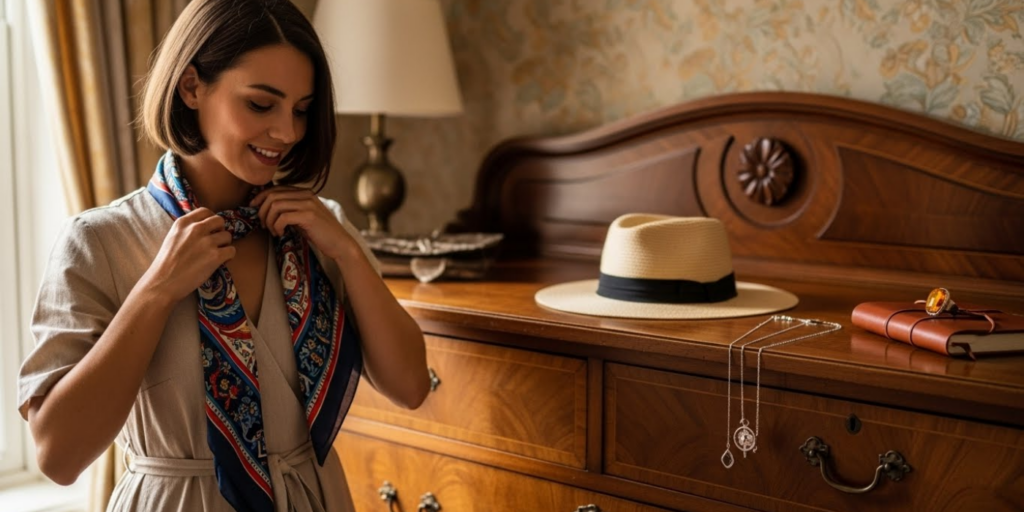
Accessories are the secret weapon of stylish travelers. They’re lightweight, packable, and transform basic outfits in seconds.
Must-pack accessories:
- One silk scarf: Tie it on your bag, wear it as a top, or drape it over your shoulders for dinner.
- Minimal jewelry: Stud earrings, a delicate necklace, and a simple bracelet won’t tangle and work with everything.
- Quality sunglasses: Choose a classic shape (aviators or tortoiseshell) that suits your face.
- Versatile bag: A crossbody in leather or vegan leather (holds phone, cards, lip balm, and passport)
Styling hack: Roll your scarf into a “headband” for bad hair days or poolside coverage.
Cultural note: In conservative destinations (like Morocco or Thailand), a lightweight scarf or sarong doubles as a respectful cover-up for shoulders or legs.
Pro tip: Store jewelry in a pill organizer or small pouch to prevent tangling.
With just a few pieces, you can shift from “tourist” to “local who knows where the best coffee is.”
Step 5: Adapt Your Outfits to Your Destination Type
One wardrobe, many destinations. Here’s how to tweak your capsule for different trips:
City Break (e.g., Paris, New York, Tokyo)
- Focus on tailored pieces: slim trousers, structured blazer, minimalist dress
- Shoes: Walkable loafers or sleek sneakers
- Accessorize with a structured tote and layered necklaces
- Outfit example: White tee + black trousers + blazer + loafers + gold hoops
Beach Getaway (e.g., Bali, Tulum, Greek Islands)
- Prioritize light, breezy fabrics: linen, cotton, rayon
- Pack a cover-up that doubles as a dress (kaftan or sarong)
- Footwear: Leather sandals or espadrilles
- Outfit example: Swimsuit + linen shirt (tied at waist) + straw hat + sandals
Adventure Travel (e.g., Patagonia, Rockies, New Zealand)
- Choose technical fabrics: quick-dry, moisture-wicking, UPF protection
- Layer with a puffer vest and hiking pants that convert to shorts
- Footwear: Sturdy trail runners (not bulky hiking boots unless necessary)
- Outfit example: Merino base layer + hiking pants + sun hoodie + trail runners
Cultural or Religious Sites (e.g., Kyoto, Istanbul, Rajasthan)
- Pack modest pieces: long skirts, tunic tops, lightweight cardigans
- Scarf or shawl for head/shoulder coverage
- Avoid tight or revealing clothing
- Outfit example: Maxi skirt + tunic + scarf + flat sandals
Key insight: The same core pieces—like a white tee or black pants—can be dressed up or down to suit any context.
Your wardrobe should be a chameleon, not a costume.
Final Thoughts: Style Is Confidence in Motion
Looking stylish while traveling isn’t about fashion labels or perfect hair. It’s about feeling comfortable in your clothes so you can be fully present—whether you’re hiking a volcano, sipping espresso in a piazza, or navigating a subway.
When you pack with intention, choose quality over quantity, and focus on versatility, you free up mental space for what really matters: the experience.
Conclusion
Creating stylish travel outfits for any destination is simpler than you think. Start with a cohesive capsule wardrobe, master layering, choose two perfect pairs of shoes, add thoughtful accessories, and adapt your look to your environment. The result? You’ll look polished, feel confident, and travel lighter—all without sacrificing an ounce of comfort.
Remember: the most stylish travelers aren’t the ones with the most clothes. They’re the ones who move through the world with ease, curiosity, and authenticity.
Now it’s your turn! What’s your go-to travel outfit formula? Do you have a “magic” scarf or pair of shoes that works everywhere? Share your favorite tips or packing hacks in the comments below! And if this guide inspired you to rethink your travel wardrobe, please share it with a friend who’s always overpacking. Safe travels—and even more stylish ones!

Michael Thompson is an enthusiast of travel, restaurants, financial freedom, and personal performance. He enjoys discovering new destinations and exploring local cuisine while constantly working on self-improvement and independence. For Michael, life is about creating meaningful experiences, growing every day, and building a lifestyle that combines freedom, discipline, and curiosity.