
Introduction
Your boss cancels a meeting. A friend texts: “I’m in Lisbon—come join me!” Or maybe you just wake up craving ocean air and realize the weather in the Azores is perfect. Whatever the reason, you’re ready to go—right now. But before you can book that flight or train, a familiar fear creeps in: “Last-minute means triple the price, right?”
Not necessarily.
While it’s true that procrastination can cost you, the world of last-minute travel has changed dramatically. Airlines, trains, buses, and rideshare companies now use smart pricing algorithms that often slash prices to fill empty seats in the final 24–72 hours. The key is knowing where to look, when to act, and how to stay flexible.
In this guide, we’ll show you how to book last-minute transport—flights, trains, buses, and more—without overpaying. You’ll learn the secrets of deal-hunting apps, how to leverage loyalty perks, and why sometimes the best strategy is to simply wait.
Spontaneity doesn’t have to be expensive. With the right tools, it can be your smartest travel move yet.
1. Use Apps Built for Last-Minute Deals
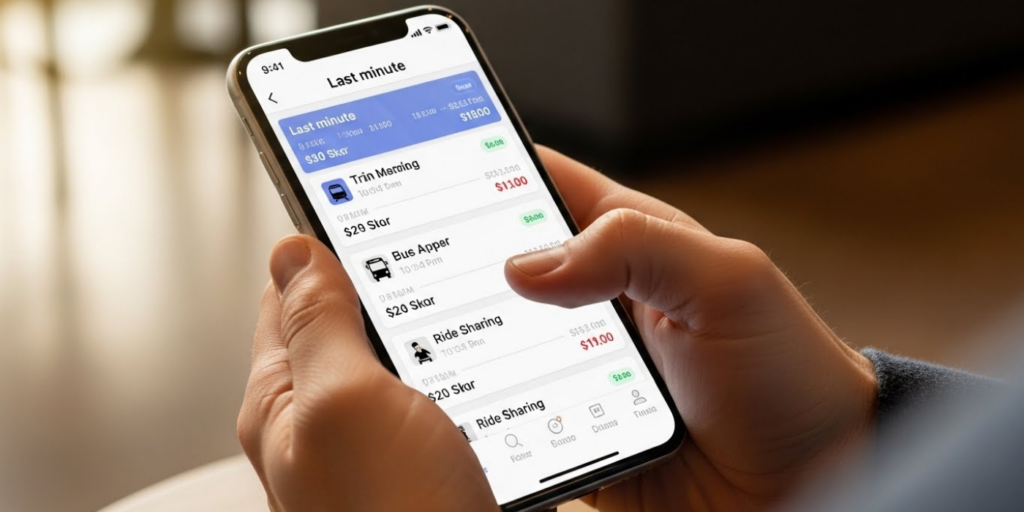
Forget checking airline websites one by one. The real savings hide in apps designed specifically for urgent, flexible travelers.
For flights:
- Hopper: Uses AI to predict price drops and alerts you when it’s the cheapest time to book—even for tomorrow’s flights. Its “Watch a Trip” feature can notify you of sub-$200 deals to Europe within hours.
- Google Flights: Toggle the “Date grid” or “Price graph” to instantly compare fares across multiple days. The “Explore” map shows the cheapest destinations from your airport right now.
- Skiplagged: Known for “hidden city” fares, it can uncover ultra-low one-way deals (though use caution with checked bags).
For ground transport:
- Trainline or Omio: Show real-time train and bus availability across Europe, often with “last-minute saver” fares that drop 24–48 hours before departure.
- Megabus or FlixBus: In the U.S. and Europe, these budget carriers release unsold seats at deep discounts the day before travel.
- BlaBlaCar: A rideshare app popular in Europe—locals driving between cities often offer seats for less than train tickets.
Pro tip: Enable push notifications on these apps. Hopper users who allow alerts are 3x more likely to book at the lowest price, according to company data.
The right app doesn’t just show options—it creates opportunity where none seemed to exist.
2. Be Strategic About Flexibility
Rigidity is the enemy of last-minute savings. The more flexible you are, the more deals you’ll find.
Shift your travel window by just one day. Flying out Thursday instead of Friday (or returning Monday instead of Sunday) can cut prices by 30–50%. Use Google Flights’ “+/- 3 days” feature to see price fluctuations at a glance.
Consider nearby airports. Instead of JFK, check Newark (EWR) or Philadelphia (PHL). In Europe, flying into Bergen (BGO) might be pricier than Stavanger (SVG)—even if it’s slightly farther from your destination.
Opt for red-eye or midday flights. Early morning or late-night departures typically have more empty seats—and lower prices. A 6 a.m. flight to Miami might cost $99, while the 3 p.m. one is $280.
Real example: A traveler in Chicago wanted to visit Denver. Same-day flights from ORD were $420. But by driving 1.5 hours to Indianapolis (IND), she found a $149 nonstop flight departing in 4 hours. Total savings: $270—and a scenic road trip included.
Flexibility isn’t a compromise—it’s your secret weapon.
3. Understand How Last-Minute Pricing Really Works
Contrary to popular belief, airlines don’t always raise prices as departure nears. In fact, they often do the opposite.
Airlines use revenue management algorithms that prioritize filling every seat. If a flight is still 40% empty 48 hours before takeoff, they may release a batch of discounted “bucket fares” to stimulate last-minute sales.
This is especially true for:
- One-way leisure routes (e.g., NYC to Las Vegas on a Tuesday)
- Off-season travel (January in the Caribbean, November in Europe)
- Business routes on weekends (empty Monday–Friday commuter flights)
Trains and buses follow similar logic. In Japan, unsold Shinkansen seats are sometimes discounted 12 hours before departure. In Germany, Deutsche Bahn’s “Sparpreis Last Minute” fares appear 7 days out—but the deepest cuts come within 48 hours.
Key insight: The “sweet spot” for last-minute deals is usually 24 to 72 hours before departure. Any sooner, and inventory isn’t released. Any later, and options vanish.
So don’t assume it’s too late. Sometimes, waiting until the last minute is the smartest move of all.
4. Leverage Loyalty Programs and Credit Card Perks
If you have travel credit cards or airline loyalty accounts, now is the time to use them—especially for last-minute bookings.
Travel credit cards (like Chase Sapphire Preferred or Capital One Venture) often include:
- Last-minute booking portals with exclusive discounts
- Points that can be redeemed for statement credits on any transport purchase
- Trip delay or cancellation insurance—critical when plans change fast
Airline and rail loyalty programs offer:
- Points redemptions with no blackout dates (great for last-minute award seats)
- Elite status perks like free same-day changes or standby upgrades
- Member-only flash sales (e.g., Amtrak’s “Weekly Specials” emailed to loyalty members)
Pro strategy: Even if you’re not a frequent flyer, sign up for free loyalty programs before you search. Many (like Delta SkyMiles or United MileagePlus) offer instant account creation and access to saver fares.
Case in point: A traveler used 15,000 Capital One miles to erase a $180 last-minute JetBlue fare entirely—leaving only $5.60 in taxes to pay.
Your points and perks aren’t just rewards—they’re insurance policies for spontaneity.
5. Avoid Common Pitfalls (Hidden Fees, Rigidity, and Scams)

Last-minute deals can come with traps. Stay sharp with these safeguards:
- Watch for hidden fees: Budget airlines (Spirit, Ryanair) may advertise $39 fares—but add $60 for a carry-on, seat selection, and printing your boarding pass. Always view the total price before checkout.
- Skip non-refundable bookings unless 100% sure: If your plans might shift, pay a few dollars more for free cancellation. Many platforms (like Expedia) now offer “Book Now, Pay Later” or flexible tickets.
- Beware of fake deal sites: Only book through reputable apps or official carrier websites. If a deal seems too good to be true (e.g., $99 round-trip to Bali), it probably is.
- Check visa and entry requirements: A last-minute flight to Turkey is useless if you need an e-visa you can’t get in 24 hours. Use iVisa or your government’s travel site to verify entry rules fast.
Also, clear your browser cookies or use incognito mode when searching. Some sites raise prices based on repeated visits.
Smart last-minute travel isn’t about grabbing the first cheap option—it’s about making informed, confident choices under pressure.
Bonus Checklist: Your Last-Minute Booking Routine
When urgency strikes, follow this 10-minute action plan:
✅ Open Hopper or Google Flights—set alerts if possible
✅ Check nearby airports and flexible dates
✅ Compare total prices (including bags, seat selection, etc.)
✅ Log into loyalty accounts for member-only rates
✅ Verify visa/entry requirements for your destination
✅ Book refundable or flexible tickets when feasible
Speed matters—but so does smart thinking.
Conclusion
Last-minute travel isn’t just for the reckless or the rich. With the right mindset and tools, it can be strategic, affordable, and deeply rewarding. The key is to stay flexible, use technology to your advantage, and understand the hidden rhythms of transport pricing.
Spontaneity doesn’t have to cost a fortune. In fact, some of the most memorable trips begin with a sudden idea and a well-timed deal.
So next time the urge to escape strikes, don’t hesitate. Equip yourself with these tips, trust your instincts, and go. The world is full of open seats—waiting for someone like you to claim them.
Have you ever scored an amazing last-minute deal? What was your destination—and how much did you save? Share your story in the comments below! And if this guide gave you the confidence to book that impulsive trip, pass it on to a friend who needs a little nudge toward adventure. ✈️🌍✨

Michael Thompson is an enthusiast of travel, restaurants, financial freedom, and personal performance. He enjoys discovering new destinations and exploring local cuisine while constantly working on self-improvement and independence. For Michael, life is about creating meaningful experiences, growing every day, and building a lifestyle that combines freedom, discipline, and curiosity.