Introduction
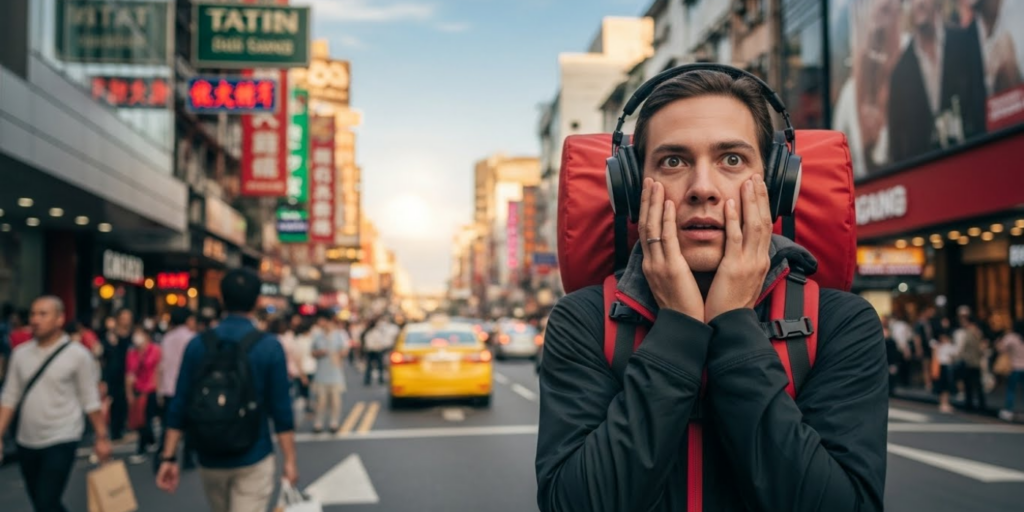
You’re standing in a bustling European square, camera in hand, when a friendly stranger offers to take your photo. Moments later, they’ve disappeared—with your phone. Or maybe you’re hailing a taxi in Southeast Asia, only to find the meter “broken,” and the fare tripled. These aren’t rare nightmares—they’re real, widespread scams that happen to thousands of travelers every year.
The truth is, scammers target tourists because they assume you’re distracted, trusting, and unlikely to report the crime. But with a little awareness and preparation, you can spot red flags before they cost you time, money, or peace of mind.
In this guide, we’ll break down the most common travel scams around the world, from fake petitions in Paris to rigged taxi meters in Bangkok—and, more importantly, give you practical, actionable strategies to avoid them. These tips come from seasoned travelers, expats, and local experts who’ve seen it all.
Whether you’re backpacking through South America or enjoying a European city break, this knowledge is your best defense. Because the goal of travel isn’t just to see the world—it’s to enjoy it safely, confidently, and without regrets.
1. The “Friendly Stranger” Scam – Too Nice to Be True
It starts innocently: someone helps you with your map, compliments your bag, or offers to take a photo. But within minutes, your wallet is gone—or you’re pressured into buying something you don’t want.
Common variations:
- The rose or bracelet scam: In cities like Rome, Paris, or Barcelona, someone (often a child or elderly person) ties a “gift” bracelet or hands you a rose. When you try to refuse, they demand payment—sometimes aggressively.
- The distraction pickpocket: While one person spills coffee on you or asks for directions, an accomplice lifts your phone or wallet.
- Fake charity petitions: In London or Amsterdam, someone approaches with a clipboard asking you to sign a petition. While you’re distracted reading, a partner steals from your bag.
How to protect yourself:
- Keep your bag zipped and in front of you in crowded areas.
- Politely decline unsolicited help or gifts—a firm “No, thank you” and walking away is enough.
- Never hand your phone or camera to a stranger—use a selfie stick or ask a uniformed employee (like a hotel concierge or police officer).
Real story:
Emma in Paris accepted a “free” flower from a woman near the Louvre. When she tried to give it back, the woman grabbed her arm and demanded €20. Emma walked away—only to realize her back pocket had been picked.
Remember: Kindness exists, but unsolicited generosity in high-tourist zones is often a tactic.
2. Transportation Traps – From Taxis to Train Tickets
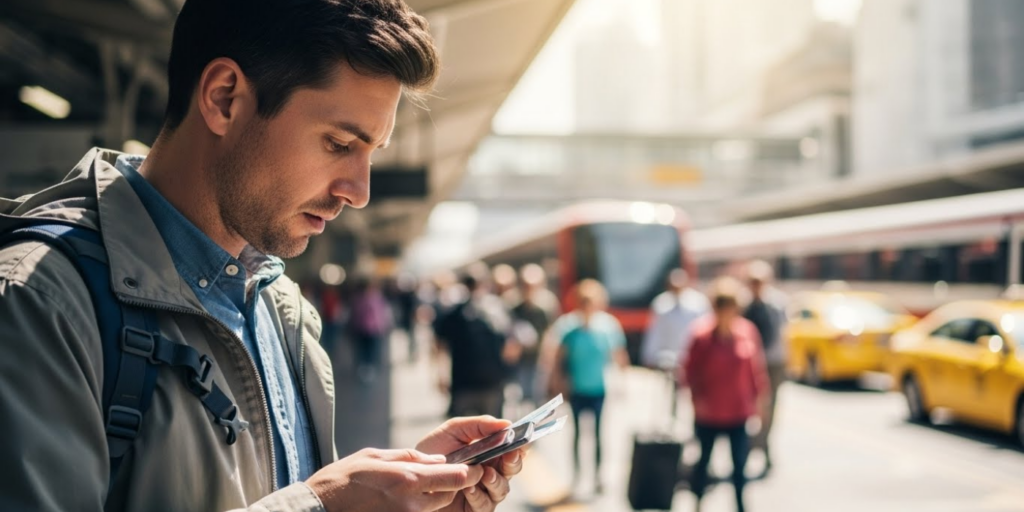
Transportation is a prime target for scams—especially when you’re tired, jet-lagged, or unfamiliar with local systems.
Top scams to watch for:
- Fake taxis: Unlicensed cabs that look official but charge 3–5x the normal fare. Common in Mexico City, Bangkok, and Istanbul.
- “Broken” meters: Drivers claim the meter is out of order and quote an inflated flat rate.
- Train ticket touts: In places like India or Italy, fake agents sell counterfeit or overpriced tickets at stations.
How to stay safe:
✅ Use official taxi stands or book rides through apps like Bolt, Uber, or local equivalents (e.g., Grab in Southeast Asia).
✅ Know the approximate fare before you go—ask your hotel or check Google Maps.
✅ Buy train tickets only at official counters or verified machines—never from someone approaching you.
Pro tip: In Europe, always validate paper train tickets before boarding (stamp them in the yellow machine on the platform). Unvalidated tickets = hefty fines, even if you paid.
Bonus: Learn to say “How much to [destination]?” in the local language. It shows you’re informed—and less likely to be overcharged.
3. Currency Confusion – Shortchanged or Counterfeit
Scammers exploit confusion over foreign money—especially in cash-heavy countries.
Classic tricks:
- The switch: A vendor gives you correct change, then “mistakenly” takes it back and replaces it with smaller bills or fake notes.
- The fake note: You receive counterfeit money as change (common in Peru, Egypt, and parts of Eastern Europe).
- The coin trick: In places that use similar-looking coins (e.g., 1€ and 2€), vendors claim you gave them a smaller denomination.
Your defense:
- Always count change in front of the vendor—don’t put it in your wallet immediately.
- Learn to spot fakes: Feel for raised print, check holograms, and hold bills to the light for watermarks.
- Use small bills when possible to avoid receiving large change.
Traveler hack: Keep a reference image of local bills on your phone. A quick glance can reveal a blurry logo or wrong color.
Also: Avoid exchanging money on the street. Use ATMs inside banks or official exchange bureaus with clear rate boards.
4. Fake Tours, Tickets, and “Free” Offers
From “sold-out” museum tickets to “exclusive” guided tours, scammers create false urgency to pressure you into paying for fake services.
Red flags:
- Someone approaches you saying, “The [famous site] is closed—but I can take you to a special entrance!”
- “Free” walking tours that end with aggressive demands for tips or upsells.
- Online deals that seem too cheap (e.g., €10 Colosseum tickets when official prices are €24).
How to avoid them:
- Book major attractions online in advance through official websites (e.g., museivaticani.va for the Vatican, not third-party resellers).
- Research reputable tour companies on TripAdvisor or GetYourGuide before arriving.
- Never buy tickets from touts outside museums or stadiums—99% are scams or resold at inflated prices.
Real example:
Jake in Rome was told the Colosseum was “fully booked” by a man in a fake uniform. He paid €50 for a “VIP tour”—only to be taken to a replica model in a parking lot.
Golden rule: If it’s not on the official website, it’s probably not real.
5. Accommodation and Rental Rip-offs
From fake Airbnb listings to overpriced “hotels,” accommodation scams can leave you stranded—or worse.
Warning signs:
- The host asks you to pay outside the platform (via PayPal, Western Union, or cash deposit).
- Photos look too professional or stock-like, with no guest reviews.
- The address is vague or changes last-minute.
How to book safely:
✅ Stick to verified platforms (Airbnb, Booking.com, Hostelworld) with clear cancellation policies.
✅ Read recent reviews—look for comments about cleanliness, location accuracy, and host communication.
✅ Message the host with specific questions—scammers often give vague or copy-pasted replies.
Pro move: Do a reverse image search on listing photos. If they appear on multiple sites, it’s likely a scam.
Also: If you arrive and something feels off (e.g., the place looks nothing like photos), leave immediately and contact the platform. Most offer 24/7 support.
6. The “Emergency” Scam – Tugging at Your Heartstrings
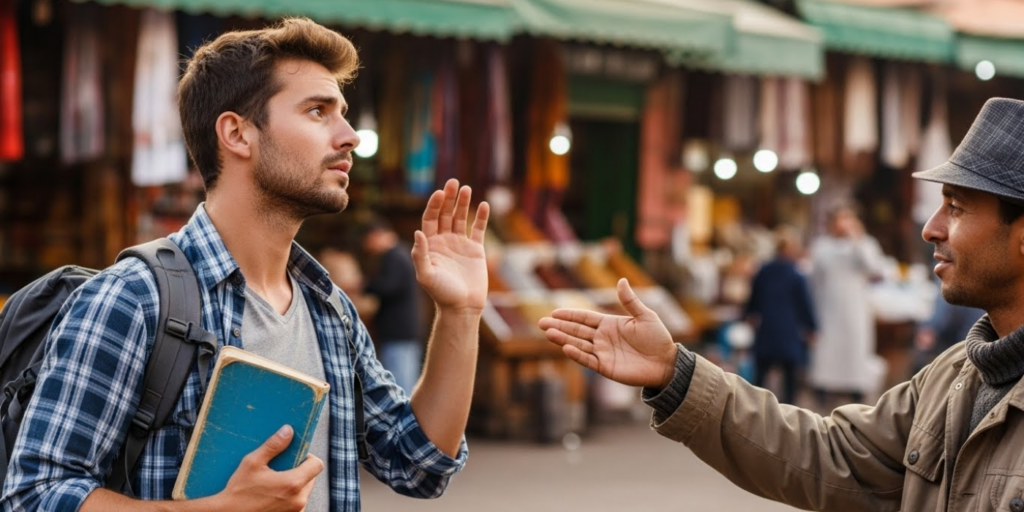
Scammers often exploit travelers’ empathy with heartbreaking stories: a sick child, a stolen wallet, or a stranded student needing bus fare.
Why it works: You want to help—and that’s admirable. But these stories are almost always fabricated.
How to respond:
- Never give cash directly—it funds the scam cycle.
- Offer to buy food or a bus ticket instead of handing over money.
- Walk away if pressured—real people in need won’t demand payment.
Better idea: Support local charities or community kitchens if you want to give back—do it intentionally, not impulsively.
Remember: Compassion is powerful—but sustainable kindness starts with awareness.
7. Digital and Tech-Based Scams – Don’t Get Hacked Abroad
Your phone and laptop are goldmines for digital thieves—especially on public Wi-Fi.
Common risks:
- Fake Wi-Fi hotspots with names like “Free Airport Wi-Fi” that steal your login credentials.
- Skimming devices on ATMs that capture your card info.
- Phishing texts pretending to be your bank or airline.
Tech safety rules:
🔒 Use a VPN (like NordVPN or ExpressVPN) on all public networks.
🔒 Enable two-factor authentication on email, banking, and social apps.
🔒 Inspect ATMs for loose parts or hidden cameras—use machines inside banks when possible.
🔒 Never click links in unsolicited texts—go directly to the official app or website.
Also: Carry a portable door alarm and cable lock for your laptop in hostels. Physical security matters too.
8. Trust Your Gut – The Ultimate Safety Tool
All the tips in the world won’t help if you ignore that little voice saying, “Something feels off.”
Your intuition is your best defense. If a deal seems too good, a stranger is overly insistent, or a situation feels rushed—pause, step back, and reassess.
It’s okay to:
- Say no firmly
- Walk away without explanation
- Ask a shopkeeper, police officer, or hotel staff for help
True story:
Lena in Marrakech was offered a “private tour” by a man who seemed knowledgeable. But his eyes kept darting toward her purse. She politely declined—and later learned he was part of a pickpocket ring.
Remember: Rudeness is better than regret. Your safety is always more important than politeness.
Conclusion: Stay Smart, Not Scared
Travel scams exist—but they shouldn’t stop you from exploring the world. With awareness, preparation, and a healthy dose of skepticism, you can navigate even the busiest tourist hubs with confidence.
We’ve covered scams involving strangers, transport, money, tickets, accommodations, emotional manipulation, and digital threats—and, more importantly, given you real, practical ways to avoid them. The key isn’t paranoia; it’s informed caution.
Arm yourself with knowledge, keep your valuables secure, and trust your instincts. That way, you’re free to focus on what travel is really about: connection, discovery, and joy.
So go ahead—book that ticket, wander those alleys, and say yes to adventure. Just do it with your eyes wide open.
Now we’d love to hear from you: Have you ever encountered a travel scam? How did you handle it? Share your story or tips in the comments below—your experience could save another traveler from a costly mistake. And if this guide helped you feel more prepared, share it with a friend who’s planning their next trip. Safe travels—and smarter exploring!

Michael Thompson is an enthusiast of travel, restaurants, financial freedom, and personal performance. He enjoys discovering new destinations and exploring local cuisine while constantly working on self-improvement and independence. For Michael, life is about creating meaningful experiences, growing every day, and building a lifestyle that combines freedom, discipline, and curiosity.