Introduction
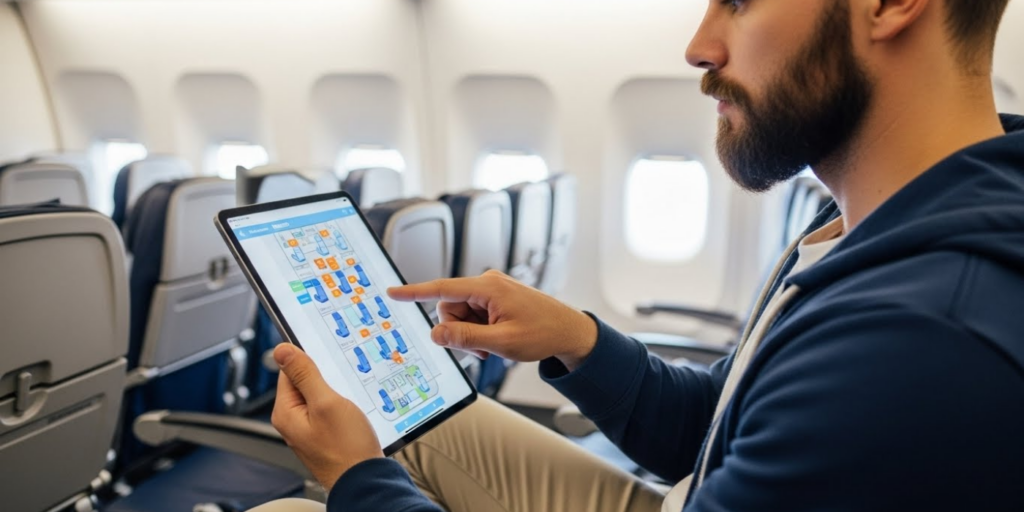
Picture this: you’re 10 hours into a 14-hour flight, your legs are cramped, the passenger in front of you just reclined into your knees for the fifth time, and you’re wedged between two strangers with no armrest to call your own. Sound familiar? For many travelers, the seat you choose can make the difference between arriving refreshed—or utterly drained.
Long-haul flights test even the most seasoned travelers. But here’s the good news: you have more control than you think. With the right strategy, you can secure a seat that offers extra legroom, quieter surroundings, faster deplaning, or even better sleep—all without upgrading to business class.
In this guide, we’ll share proven, practical tips for choosing the best seat on long flights, whether you’re flying economy, premium economy, or using points. You’ll learn how to read seat maps like an expert, which seats to avoid at all costs, how timing impacts availability, and how to use free tools to find hidden gems. Because when you’re spending half a day in the sky, your seat isn’t just a detail—it’s your home away from home.
Let’s help you fly smarter, comfier, and more peacefully.
1. Know Your Priorities: What Matters Most on a Long Flight?
Before you even glance at a seat map, ask yourself: What will make this flight bearable—or even enjoyable?
- Need to sleep? A window seat away from galleys and bathrooms minimizes disturbances.
- Tall or prone to stiffness? Prioritize exit rows or bulkhead seats for maximum legroom.
- Traveling with kids? Aisle seats near the front allow quick bathroom access and faster deplaning.
- Anxious flyer? Sit over the wings—this is the most stable part of the plane during turbulence.
- Connecting to another flight? Choose a seat near the front exit to deplane quickly.
Your ideal seat changes based on your body, your travel goals, and even your mood. Business traveler Priya always books a front window seat on red-eyes: “I sleep better, get meals first, and avoid the rush at baggage claim.” Meanwhile, Mark, who flies with his elderly mother, swears by bulkhead aisle seats for the extra floor space and easier access.
Bottom line: Define your “why” first—then let it guide your choice.
2. Decode the Aircraft Seat Map Like a Pro
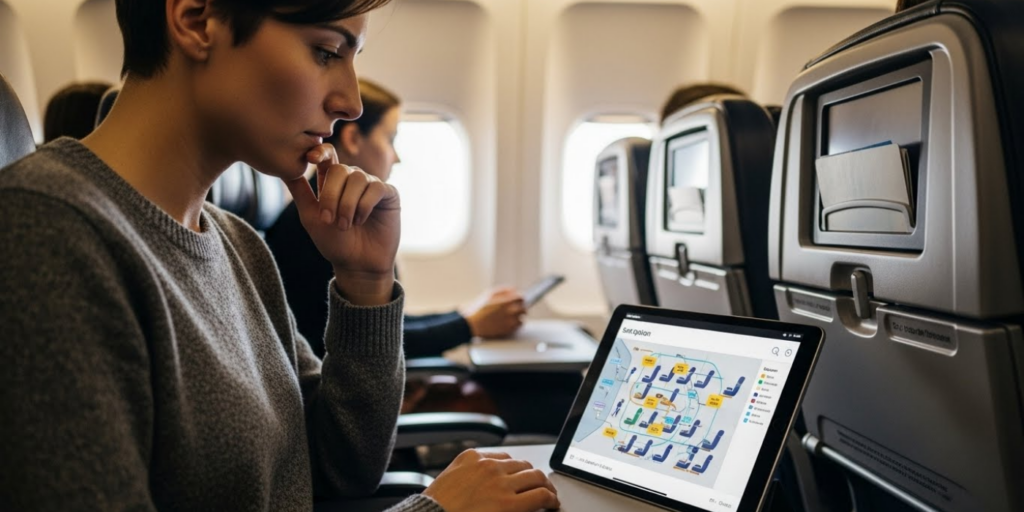
Most airlines show seat maps during booking—but the real insight comes from reading between the lines. That’s where free tools like SeatGuru, Aerolopa, or ExpertFlyer shine.
These sites provide detailed aircraft diagrams that reveal:
- Which seats have limited or no recline (often near galleys or bulkheads)
- Which exit rows offer the most legroom (some are tighter than they look!)
- Where bathrooms, galleys, and bassinet stations are located
- Which window seats have misaligned windows or curved walls (common on wide-bodies)
Key labels to understand:
- Green = Preferred or extra-legroom seats (may cost $20–$80)
- Gray or red X = Blocked (often reserved for elite flyers; may open 24–48 hours pre-flight)
- “X” on seat = No recline (common in front of exit rows)
Pro tip: On Airbus A350s or Boeing 787s, upper deck or mini-cabin seats (like rows 30–35 on some layouts) are quieter and less crowded—even in economy.
Don’t just pick the first available seat. Study the map like a flight attendant would—it’s your blueprint for comfort.
3. Best (and Worst) Seat Locations on Long-Haul Aircraft
Not all parts of the plane are equal—especially on flights over 6 hours.
Front of the cabin:
✅ Quieter, less turbulence, faster meal service, first to deplane
❌ Often reserved for elites or sold as “preferred” seating
💡 Tip: Even in economy, paying $30 for a front seat can be worth it for tall passengers or light sleepers.
Over the wings:
✅ Most stable during turbulence (ideal for nervous flyers)
✅ Usually mid-cabin—good balance of service and quiet
❌ Engine noise may be slightly louder (though modern planes are very quiet)
Rear of the plane:
✅ Sometimes cheaper or easier to get extra-legroom seats
❌ Loudest (engines), bumpiest, warmest (heat rises), last to deplane
❌ Near lavatories = constant foot traffic and light
Aisle vs. Window:
- Aisle: Easier bathroom access, less feeling of confinement
- Window: Privacy, headrest for sleeping, unbeatable views
- Middle: Almost never ideal on long flights—avoid unless unavoidable
Special note: On Boeing 777s, some window seats in the rear have curved fuselage walls that make leaning uncomfortable. Check SeatGuru’s photos before choosing.
4. Use Timing and Loyalty to Score Better Seats for Free
You don’t always need to pay for a great seat—strategy can get you one at no cost.
Book early—but check again later:
Airlines often reserve the best seats (bulkhead, exit row) for elite members at first. But 24–48 hours before departure, these seats frequently open up as elites finalize plans or upgrade.
Check in exactly at the 24-hour mark:
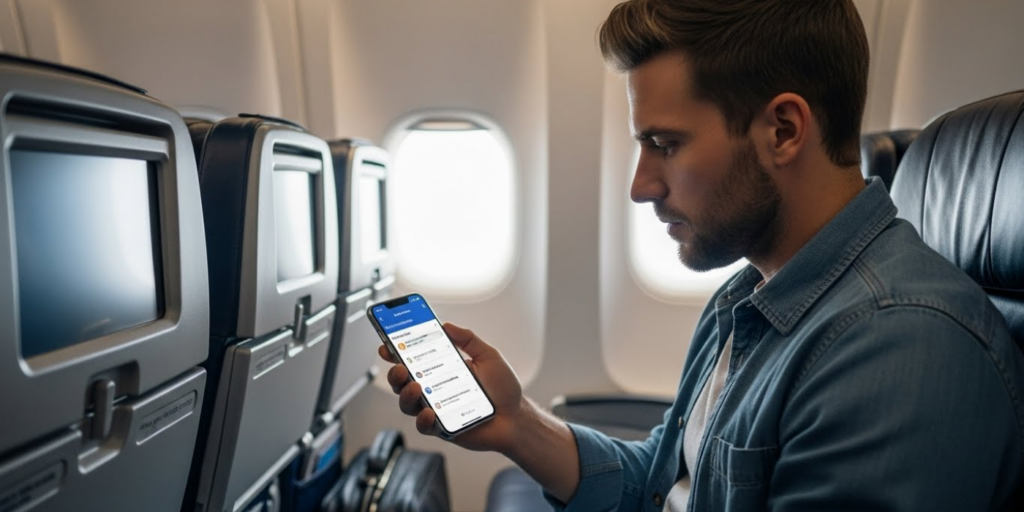
Most airlines open check-in precisely 24 hours before departure. Have your app ready—prime seats often go within minutes.
Use airline apps, not third-party sites:
Booking through Expedia or Google Flights may delay seat selection until check-in. Booking directly with the airline gives immediate access to maps and loyalty perks.
Call the airline:
Agents sometimes see seats not visible online—especially for travelers with special needs or families.
Leverage status or credit cards:
Even without elite status, some travel credit cards (like Chase Sapphire Reserve or Amex Platinum) offer free seat selection or priority boarding.
Real win: Traveler Jen scored a bulkhead exit row on a New York–Tokyo flight by checking in the second the 24-hour window opened—no fee, just timing.
5. Avoid These Seats at All Costs (They Look Fine—Until You’re Trapped)
Some seats seem acceptable on the map but are secretly miserable. Here’s your “never book” list:
- Seats directly in front of an exit row: You cannot recline—ever.
- Last row on any aircraft: No recline, noise from lavatories, and you’re the last off the plane.
- Seats near bathrooms or galleys: Constant light, noise, queuing passengers, and odors.
- Middle seats in 3–3–3 or 3–4–3 layouts: You’ll be climbing over people for 12+ hours.
- Bulkhead seats with bassinet tables: On overnight flights, babies may be strapped right in front of you.
- Seats with missing windows (e.g., near emergency exits or wings): No view, just a metal wall.
Pro tip: On Airbus A321neos or Boeing 737 MAX, some “extra-legroom” seats have reduced seat width to compensate—check dimensions before paying.
A few extra minutes of research can save you hours of discomfort.
6. Special Considerations: Solo Travelers, Couples, and Families
Tailor your strategy to who you’re flying with:
Solo travelers:
- Window seats offer privacy and a “wall” to lean against.
- On red-eyes, choose seats ahead of the wing—quieter and smoother.
- Consider singles-friendly airlines like JetBlue or Air New Zealand with dedicated solo seating.
Couples or friends:
- Avoid middle seats in a row of three—opt for two aisle seats across from each other if window/aisle isn’t available.
- On wide-bodies (like 777 or A380), rows of 2 (e.g., D+G) offer intimacy without a stranger between you.
Families with children:
- Book together early—don’t rely on the airline to seat you together.
- Choose bulkhead rows for bassinets (if flying with an infant).
- Avoid exit rows—children under 15 can’t sit there.
- Some airlines (like Delta) offer family boarding—ask at check-in.
Traveling with disabilities or medical needs:
- Contact the airline in advance for bulkhead seating or accessible lavatories.
- Bring a doctor’s note if you need specific accommodations.
Your seat choice should reflect not just comfort—but connection and care.
Conclusion
Choosing the best seat on a long flight isn’t about luck—it’s about awareness, timing, and knowing what to look for. Whether you’re chasing extra legroom, a quiet corner for sleep, or a lightning-fast exit, smart seat selection can transform your journey from grueling to surprisingly peaceful.
You don’t need to pay for premium cabins to fly well. With free tools like SeatGuru, strategic timing, and a clear sense of your priorities, you can often find excellent seats—even on basic economy fares.
So next time you book a long-haul flight, don’t just click “random assignment.” Take five minutes to research, plan, and choose with intention. Your back, your sleep, and your sanity will thank you.
We’d love to hear from you!
What’s your go-to strategy for long flights? Have you ever turned a dreaded red-eye into a restful journey thanks to the right seat? Share your tips and stories in the comments below—and don’t forget to pass this guide to a fellow traveler who’s tired of middle seats and reclining nightmares! Safe and comfortable travels! ✈️😴

Michael Thompson is an enthusiast of travel, restaurants, financial freedom, and personal performance. He enjoys discovering new destinations and exploring local cuisine while constantly working on self-improvement and independence. For Michael, life is about creating meaningful experiences, growing every day, and building a lifestyle that combines freedom, discipline, and curiosity.