Introduction
You’re wandering the winding streets of Lisbon, stomach growling, when you spot two restaurants side by side. One is packed with locals laughing over steaming plates; the other has a glossy menu in five languages and a host aggressively waving you in. Which do you choose?
In today’s digital age, you don’t have to guess. Powerful, smart apps can help you cut through the tourist traps and discover the authentic, top-rated local gems that serious food lovers—and residents—actually love. Whether you’re in Tokyo, Tulum, or Tulsa, the right app can transform your meal from forgettable to unforgettable.
But not all restaurant apps are created equal. Some prioritize popularity over quality, others drown you in ads, and a few even feature fake reviews. So which ones truly deliver trustworthy, useful insights?
In this guide, we’ll break down the best apps for finding top-rated local restaurants, explaining what makes each unique, how to use them like a pro, and when to combine them for maximum results. From global giants to hidden local favorites, these tools will become your go-to meal scouts on every journey.
Let’s turn your next bite into your best one yet.
1. Google Maps: The All-in-One Powerhouse
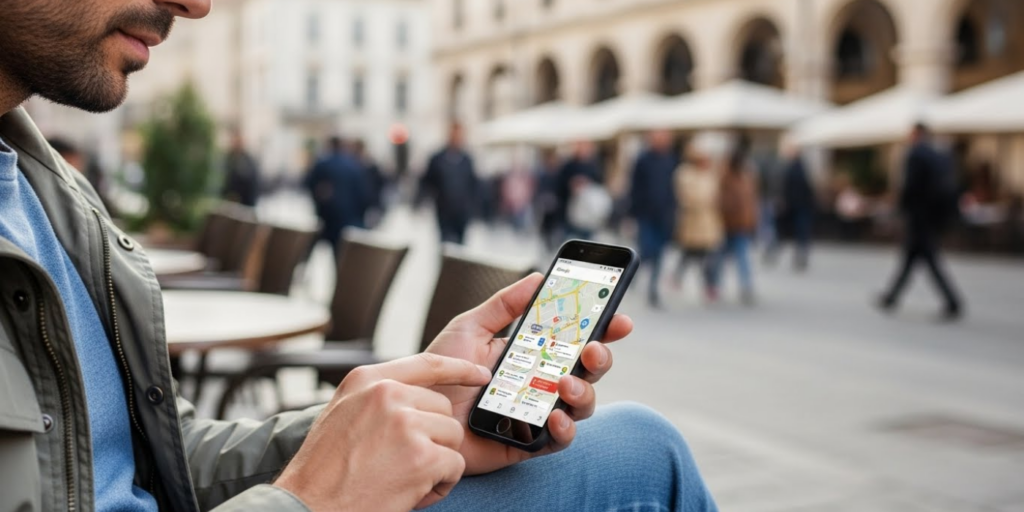
When it comes to restaurant discovery, Google Maps is the unsung hero—and many travelers don’t even realize its full potential.
Beyond navigation, Google Maps aggregates millions of reviews, photos, menus, and real-time data from both locals and travelers. Its algorithm heavily weights recent, detailed reviews, making it harder for fake or outdated ratings to dominate.
Why it shines:
- “Popular times” feature: See exactly how busy a place is right now—or at any hour of the day.
- Photo filters: Scroll through user-uploaded images of actual dishes (not just stock food photos).
- Local insights: Look for phrases like “best in the neighborhood” or “locals only” in reviews.
- Offline access: Download a city map before your trip—perfect for avoiding data charges abroad.
Pro tip: Tap the restaurant’s name → scroll to “Reviews” → tap “Sort: Newest” or “Highest rating.” Then, search within reviews for keywords like “authentic,” “hidden gem,” or “tourist trap.”
Real-world win: While in Rome, traveler Maya avoided a $30 “tourist pizza” by checking Google Maps and finding a nearby pizzeria al taglio with 4.8 stars and photos of Romans grabbing lunch. Total cost? €4.
Google Maps doesn’t just tell you where to eat—it tells you when, what, and why.
2. Yelp: Deep Reviews and Local Experts
While Google offers breadth, Yelp delivers depth—especially in the U.S., Canada, and parts of Europe.
What sets Yelp apart is its community of dedicated “Elite” reviewers who post detailed, photo-rich critiques, complete with notes on service, ambiance, and dietary accommodations (vegan, gluten-free, etc.). Many restaurants even respond directly to feedback, showing they care.
Key features:
- Advanced filters: Sort by “Open now,” “Outdoor seating,” “Good for groups,” or “Takes reservations.”
- Price indicators: Dollar signs ($ to $$$$) give quick cost context.
- “Top Rated” and “Hot & New” lists: Curated picks that go beyond raw star ratings.
When to use it:
- Planning a special dinner (check for noise level and dress code notes)
- Finding dietary-friendly spots (search “vegan sushi” or “gluten-free bakery”)
- Researching before your trip—Yelp’s city guides are surprisingly thorough
Caveat: Yelp is strongest in North America. In many international destinations, reviews are sparse or outdated—so pair it with Google Maps when abroad.
Pro insight: Look for reviewers with hundreds of reviews and consistent writing style—they’re more reliable than one-off posters. And ignore 1-star rants about “long wait times” at a famous taco truck—some crowds are worth it!
Yelp is your food-savvy local friend who’s eaten everywhere—and remembers every bite.
3. Tripadvisor: Global Reach with Traveler Context
For international trips, Tripadvisor remains a valuable (if imperfect) tool—not because it’s the most accurate, but because it offers context from fellow travelers.
Unlike purely local apps, Tripadvisor shows how a restaurant compares to others in the area from a tourist’s perspective. This is especially useful in destinations where language barriers or cultural differences make it hard to judge a place on your own.
What it does well:
- Rankings by neighborhood (e.g., “#3 of 423 restaurants in Montmartre”)
- Traveler photos showing portion sizes and plating
- Integration with tours and hotels—many users review dining as part of their full trip
Red flags to watch:
- Overly generic 5-star reviews (“Great food!” with no details) may be fake.
- Extremely negative reviews about “slow service” might just reflect local dining culture (e.g., long, relaxed meals in Spain).
Best used for:
- Initial research in unfamiliar countries
- Cross-referencing with Google Maps (if both show high ratings, it’s likely legit)
- Finding restaurants near your hotel or attraction
Pro tip: Use the “Travelers’ Choice” badge—Tripadvisor’s editorial pick based on consistent quality and reviews over time.
Think of Tripadvisor as your fellow traveler’s notebook—useful, but always verify.
4. The Hidden Gems: Local and Niche Apps

Sometimes, the best finds come from apps most tourists never open.
OpenTable:
- Best for reservations at mid-to-upscale restaurants in the U.S., Canada, and U.K.
- Offers real-time availability and rewards (e.g., 1,000 points = $20 off).
- Use the “Top 100” or “Diners’ Choice” lists for curated excellence.
Resy:
- Favored by foodies in cities like New York, L.A., and Miami.
- Focuses on trendy, chef-driven spots that often skip OpenTable.
- “Notify” feature alerts you when a sold-out table opens.
Foursquare (now Swarm + Foursquare City Guide):
- Powered by local data scientists who built the original location database for many big apps.
- Its “Top Picks” algorithm highlights places locals love but tourists miss.
- Particularly strong in Europe and Latin America.
Local apps:
- Tabelog (Japan): The gold standard in Tokyo—locals trust it more than Google.
- Dianping (China): Essential for navigating Shanghai or Beijing.
- Zomato (India, Middle East): Detailed menus, pricing, and photos.
Why go niche? Because the best bánh mì in Hanoi or the coziest osteria in Florence won’t always show up on global platforms. Sometimes, you need the local key to unlock the door.
How to Combine Apps for the Perfect Find
No single app has all the answers. The smartest food explorers layer insights:
- Start with Google Maps for real-time ratings, photos, and crowd levels.
- Cross-check with Yelp or Tripadvisor for detailed reviews and context.
- Scan for reservations on OpenTable or Resy if it’s a popular spot.
- Ask locals—your Airbnb host, hotel concierge, or even a friendly barista often has the best recommendation of all.
Example: In Barcelona, you find a seafood paella spot on Google Maps (4.6 stars, recent photos of golden crust). Yelp confirms it’s not a tourist trap (“locals eating here at 2 p.m.”). Tripadvisor travelers praise the view. You book via TheFork (OpenTable’s European sister) to skip the line. Result? A perfect meal.
Bonus hack: Use Instagram geotags. Search the restaurant’s location—real people’s stories and reels often show the true vibe and dish quality better than any review.
The goal isn’t just a highly rated meal—it’s the right meal for you, in that moment.
Final Thoughts: Tech as Your Tastemaker
Apps won’t replace the joy of stumbling upon a hole-in-the-wall with handwritten menus and the best espresso of your life. But they can help you wander with more confidence, avoid costly mistakes, and spend less time searching—and more time savoring.
In the end, the best restaurant isn’t always the one with the most stars. It’s the one that makes you lean back, smile, and say, “This is exactly what I needed.”
Let these apps be your compass—not your cage.
Conclusion
Finding top-rated local restaurants has never been easier—if you know which tools to use and how to use them wisely. We’ve explored Google Maps for real-time insights, Yelp for deep local reviews, Tripadvisor for traveler context, and niche apps like Resy and Tabelog for hidden gems. By combining these resources and staying open to human recommendations, you’ll consistently eat better, more authentically, and often for less.
Remember: technology enhances intuition, but doesn’t replace it. Trust your eyes, your nose, and your gut—especially when a tiny trattoria smells like garlic and laughter.
Now we’d love to hear from you!
Which app has led you to your best meal ever? Do you have a go-to strategy for finding local favorites? Share your tips or questions in the comments below. If this guide helped you eat like a local on your last trip, share it with a fellow food lover who’s tired of tourist menus. Happy hunting—and even happier eating!

Michael Thompson is an enthusiast of travel, restaurants, financial freedom, and personal performance. He enjoys discovering new destinations and exploring local cuisine while constantly working on self-improvement and independence. For Michael, life is about creating meaningful experiences, growing every day, and building a lifestyle that combines freedom, discipline, and curiosity.