Introduction
What if travel could do more than show you new places—what if it could change how you see the world? While snapping photos of landmarks is fun, the most transformative journeys happen when you step beyond the tourist trail and into the living heart of a culture. These aren’t just “activities”—they’re moments of genuine connection, reverence, and wonder that linger long after your suitcase is unpacked.
From fire-walking ceremonies in Fiji to singing sand dunes in Mongolia and masked dances deep in the Himalayas, our planet is filled with cultural traditions that defy the ordinary. Yet many of these experiences are fragile, fading, or accessible only to travelers who seek them with respect and intention.
In this article, we’ll explore eight of the most unique cultural experiences around the world—each rooted in centuries of tradition, still practiced today, and open to thoughtful visitors. You’ll discover where to go, what makes each experience profound, and how to engage responsibly so your presence supports—not disrupts—the community that shares it.
Because the best travel doesn’t just fill your camera roll—it fills your soul.
1. Attend the Gerewol Festival of the Wodaabe, Niger
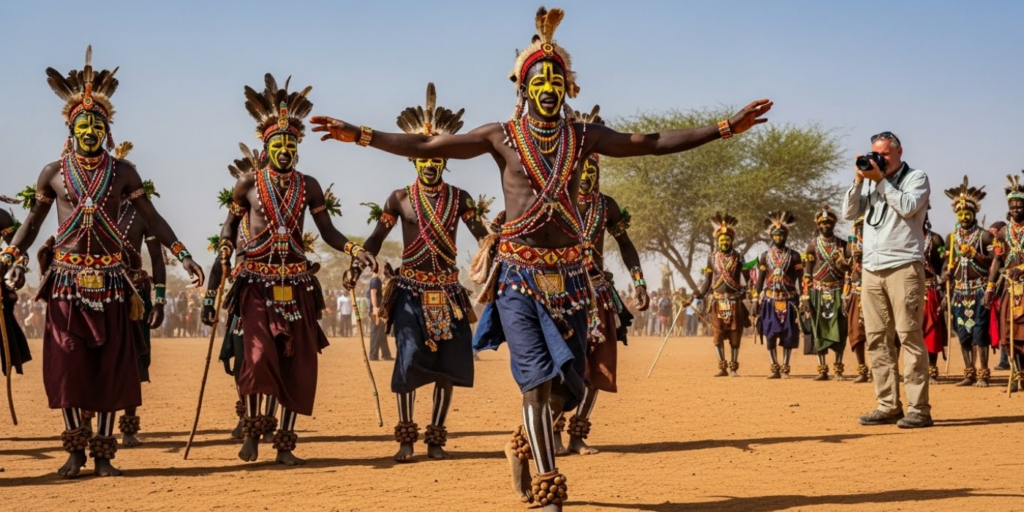
In the vast expanse of the Sahel desert, the semi-nomadic Wodaabe Fulani people host one of the world’s most extraordinary beauty pageants—but with a twist: the contestants are men, and the judges are women.
Held after the rainy season (usually September), the Gerewol Festival is a courtship ritual where Wodaabe men adorn themselves with intricate white clay, kohl-lined eyes, beads, and feathers. They perform the Yaake dance, rolling their eyes and baring teeth to display symmetry and charm—all to win the admiration of female selectors.
Why it’s unparalleled:
This celebration flips Western gender norms and centers grace, poetry, and aesthetic discipline as male virtues. The festival also reinforces social bonds among clans that spend most of the year dispersed across the desert.
How to visit responsibly:
- Go with a reputable, community-vetted tour operator like SaharAventures.
- Ask permission before photographing—many Wodaabe welcome photos but value respect over intrusion.
- Bring practical gifts like tea, sugar, or fabric—not money, which can distort cultural dynamics.
Note: This is remote travel—expect basic camping and long drives. But for those seeking raw, authentic cultural immersion, the Gerewol is unmatched.
2. Participate in a Balinese Tooth Filing Ceremony (Metatah)
In Bali, Indonesia, coming of age isn’t marked by birthdays—but by a sacred ritual called Metatah, or tooth filing. Rooted in Hindu-Balinese belief, this ceremony symbolizes the filing away of negative human traits: lust, greed, anger, jealousy, intoxication, and confusion.
The ritual is deeply spiritual—performed by a priest or village elder—and involves filing the six upper canine teeth into a straight line. Far from painful, many describe it as meditative.
Why it’s meaningful:
Unlike performative rites of passage, Metatah is a private, family-centered act of purification. While traditionally for teens, adults who missed it often schedule it before marriage.
Can tourists participate?
Generally, no—Metatah is reserved for Balinese Hindus. However, respectful observers may be invited if they have close local ties. Alternatively, you can learn about it through cultural centers like ARMA Museum in Ubud, which offers ethical demonstrations.
Takeaway: This experience reminds us that beauty in Balinese culture isn’t cosmetic—it’s moral.
3. Witness the Whirling Dervishes in Turkey
In Konya, Turkey, the Mevlevi Order performs the Sema—a 700-year-old Sufi ceremony where “Whirling Dervishes” spin in hypnotic circles, arms open, as a form of active meditation and devotion to God.
The dervishes wear tall felt hats (symbolizing tombstones) and flowing white robes (shrouds). Their spinning represents the planets orbiting the sun—and the soul’s journey toward divine love.
Why it’s transcendent:
Unlike performances for tourists, the authentic Sema in Konya (especially during the annual Rumi Festival in December) is a religious act, not entertainment. The silence, music, and motion create an atmosphere of profound stillness—even amidst movement.
How to experience it:
- Attend the Mevlana Cultural Center in Konya during the festival for the most authentic version.
- Dress modestly, remain silent, and never use flash photography.
- Read Rumi’s poetry beforehand to deepen your understanding.
As one traveler shared: “I didn’t understand the theology, but I felt peace in my bones. It was like watching prayer made visible.”
4. Join the Holi Festival in Vrindavan, India
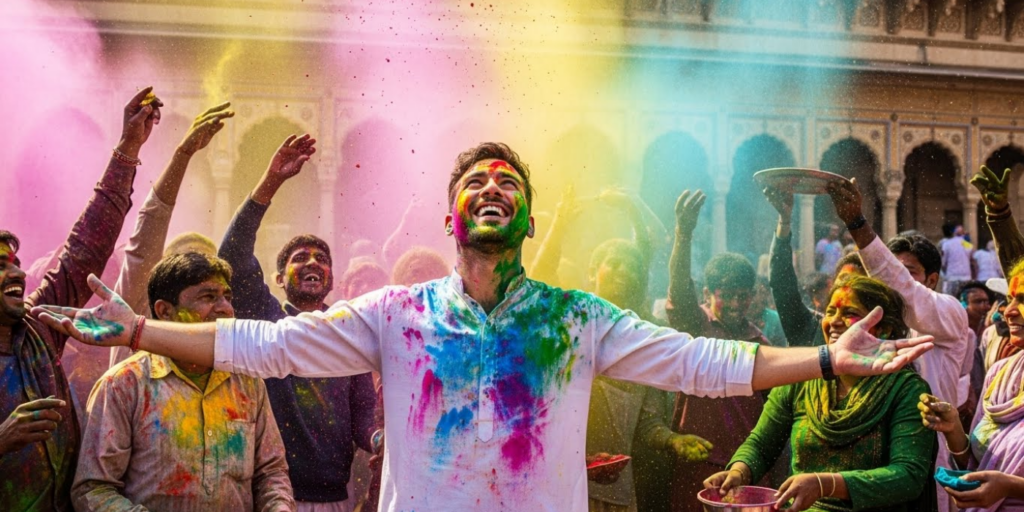
While Holi is celebrated across India, the holy town of Vrindavan—associated with Lord Krishna—hosts the most spiritually layered version. Here, Holi isn’t just about colored powder; it’s a devotional reenactment of Krishna’s playful love.
For nearly a week, temples echo with kirtans (devotional songs), and streets explode in clouds of organic colors, flower petals, and drumbeats. Unique events include:
- Lathmar Holi: Women playfully “beat” men with sticks—a reversal rooted in legend.
- Phoolon ki Holi: A serene, fragrant celebration using only marigolds and roses.
Why Vrindavan stands out:
Unlike commercialized Holi parties in cities, this is faith in motion. Locals invite respectful visitors to join, blurring the line between participant and pilgrim.
Travel tips:
- Wear old white clothes—you’ll be drenched in color.
- Use natural, herbal powders (avoid synthetic dyes).
- Stay near Banke Bihari Temple for front-row access to celebrations.
This is joy with purpose—a festival that blends ecstasy and reverence in equal measure.
5. Experience a Sami Reindeer Migration, Norway
In the Arctic wilderness of northern Norway, the Indigenous Sami people have herded reindeer for over 1,000 years. During seasonal migrations (spring and autumn), families guide thousands of reindeer across snowy tundra—a practice deeply tied to identity, land, and survival.
Why it’s profound:
The Sami worldview centers on harmony with nature. Their language has dozens of words for snow and reindeer, reflecting a life shaped by rhythm, not rush. In an age of climate crisis, their wisdom feels urgent.
How to engage ethically:
- Book through Sami-owned operators like Sapmi Nature or Sami Siida.
- Spend a day with a family: help feed reindeer, hear joik (traditional songs), and share a meal of bidos (reindeer stew).
- Never photograph sacred sites like sieidi (spirit stones) without permission.
Note: This isn’t a show—it’s a working cultural landscape. Your role is guest, not spectator.
6. Attend the Up Helly Aa Fire Festival, Scotland
On the last Tuesday of January, the town of Lerwick in Scotland’s Shetland Islands erupts in flames—not from chaos, but from Norse-inspired tradition. Up Helly Aa honors Viking heritage with a torchlit parade, costumed “guizers,” and the burning of a replica longship.
The festival culminates in a massive bonfire, followed by all-night music and storytelling in community halls.
Why it’s unique:
Unlike commercial fire festivals, Up Helly Aa is entirely organized by locals—many of whom spend a year building the ship and crafting costumes. No tourists are allowed in the main hall celebrations unless personally invited.
How to visit:
- Book accommodations a year in advance—this remote island fills fast.
- Attend the public parade and bonfire (open to all).
- Respect the community’s privacy—don’t push for access to closed events.
This is heritage as lived history—not performance.
7. Take Part in a Maori Powhiri Welcome, New Zealand
In New Zealand, the Māori people greet visitors with a pōwhiri—a ceremonial welcome that blends challenge, song, and shared breath. It begins with a wero (challenge), where a warrior lays a token at your feet; if you accept it peacefully, you’re welcomed as friends.
The ceremony includes waiata (songs), whaikōrero (speeches), and the hongi—pressing noses and foreheads to share the “breath of life.”
Why it matters:
The pōwhiri embodies manaakitanga—Māori hospitality rooted in generosity, respect, and spiritual connection. It’s not entertainment; it’s a bridge between worlds.
Where to experience it:
- Tamaki Māori Village (Rotorua): Offers immersive evening experiences with hangi feast.
- Te Puia: Supports Māori arts and education with cultural shows.
- Marae stays: Some communities offer overnight homestays (arranged through official channels).
Cultural note: During the hongi, close your eyes—it’s a moment of quiet unity.
8. Walk the Oshima Peninsula’s Naked Festival, Japan
Each February, thousands of nearly nude men gather at Saidaiji Temple in Okayama, Japan, for the Hadaka Matsuri (Naked Festival). Dressed only in fundoshi (loincloths) and tabi socks, they jostle to catch sacred shingi sticks thrown by priests—believing the catch brings a year of luck.
Why it’s fascinating:
Rooted in Shinto purification, the festival blends chaos, spirituality, and community. Despite the frenzy, strict rules prevent injury—elders watch from the sidelines, and newcomers are guided by veterans.
Visitor etiquette:
- Do not touch participants—they’re in a sacred state.
- Watch from designated areas; photography is allowed but be discreet.
- Visit during the day for the main event; evening rituals are more solemn.
This isn’t spectacle—it’s devotion in motion.
Conclusion
The world’s most unique cultural experiences aren’t found in guidebooks—they’re discovered through curiosity, humility, and respect. Each tradition on this list offers more than a photo op; it invites you to witness humanity’s incredible diversity of belief, expression, and resilience.
But with that privilege comes responsibility. Always ask: Who benefits? Who leads? How can I show up as a guest, not a consumer? Seek community-run experiences, listen more than you speak, and prioritize preservation over participation.
Because these traditions are not relics—they’re living, breathing parts of people’s lives. And when we honor them, we don’t just enrich our travels—we help ensure they endure for generations to come.
We’d love to hear from you!
Which of these experiences moved you most? Have you witnessed a cultural tradition that changed your perspective? Share your story in the comments below—and if you know a fellow traveler who values depth over likes, send them this guide. The world’s deepest wonders await those who travel with heart. 🌍✨

Michael Thompson is an enthusiast of travel, restaurants, financial freedom, and personal performance. He enjoys discovering new destinations and exploring local cuisine while constantly working on self-improvement and independence. For Michael, life is about creating meaningful experiences, growing every day, and building a lifestyle that combines freedom, discipline, and curiosity.